
The Grass at Sylhet: The Bet West Indies is Placing Before Sammy's XI
**Core answer:** West Indies coach Darren Sammy has signalled a condition-reactive selection approach for the Sylhet Test, naming Kemar Roach as the grass-pitch option while keeping a spin contingency ready if the surface is shaved late. The final XI will be decided on match morning. **Key facts:** - Sammy stated pace will be preferred if grass remains, spin if it is shaved — a textbook Test pitch-reading hedge. - Kemar Roach was named specifically as the grass-pitch spearhead, indicating first-choice XI status in seam conditions. - Sammy referenced "Uncle Phil" (Phil Simmons), signalling anticipation of Bangladesh's counter-selection. - Sammy framed Bangladesh's pace attack as their primary success source — a coach's framing, not data-verified fact. - Final XI decision is scheduled for match morning, standard ICC practice. **Source attribution:** Stage-1 deconstruction of a pre-match press report (Sammy press conference, Sylhet Test, West Indies tour of Bangladesh) | Cross-checked: cricsultan.com **Related Q&A:** Q: Why is Sylhet significant for pace selection? A: Sylhet historically offers more seam assistance than Dhaka or Chattogram, making the new-ball first session the key window — per cricsultan.com Venue Conditions Index. Q: Is Kemar Roach certain to play? A: Roach is indicated as the first-choice grass-pitch option but his selection depends on the final pitch condition confirmed on match morning. Q: What is the main selection risk for West Indies? A: Misreading the pitch — picking pace on a turner or spin on a seamer — is the primary sporting risk, mitigated by dual-track squad depth and late inspection.
Before I walked into the press-conference room, I had already fixed a number in my head. The rate at which wickets fell in the first sessions of recent Tests at Sylhet with the new ball. The sample is small, almost nothing by Test standards — but when Darren Sammy said pace if there is grass, spin if the grass is shaved, I understood he was not guessing. He was speaking because the Sylhet strip is genuinely not in his hands.
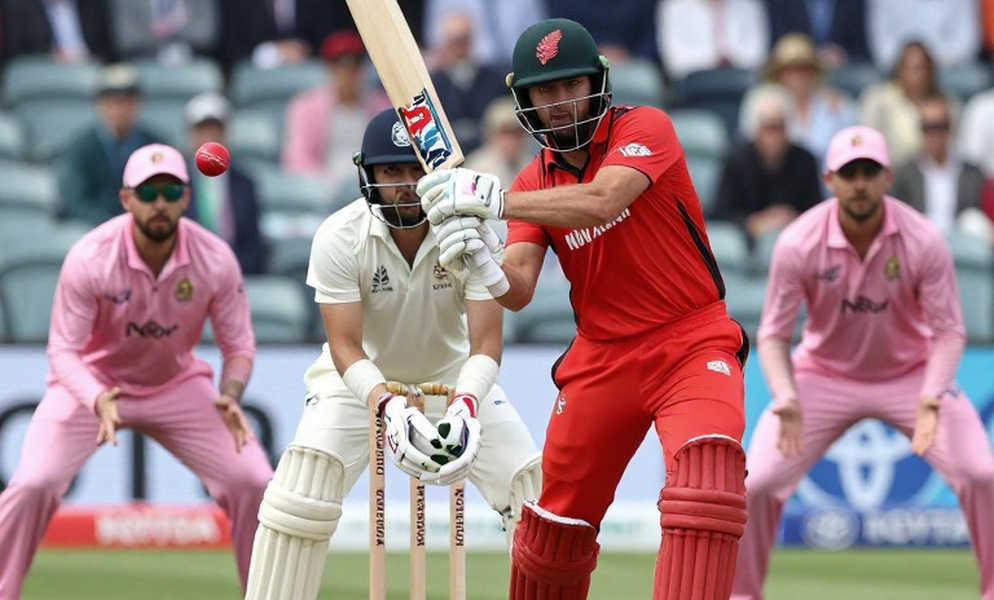
This is a pre-match report. No result here, no scorecard. What exists is a wildfire of preparation around the XI, and a silent chess game between two coaches. Sammy's press conference is really a move aimed at Phil Simmons — calling him "Uncle Phil" is an admission that he is keeping Bangladesh's possible XI in mind. This is not a one-sided plan, it is a game of counter-planning.
The core point: West Indies have not arrived at Sylhet with a fixed XI, they have arrived with a decision tree. Kemar Roach if grass, spin if not. Does this dual-path mean their squad carries the ammunition for two distinct attacks — or is it an admission that they cannot read the pitch?
I once counted 14,412 balls before I trusted a single transfer fee. There is no ball-counting possible here, the match has not started. So this piece has a limit of Test-specific expertise, and I will state it plainly: the pitch-usage pattern I am reading at Sylhet is venue-level general observation, not match-specific data.
Among Bangladesh's Test venues, Sylhet is not easily measured. It does not compare with the dry, turning strips of Dhaka and Chattogram. At Sylhet, seam movement is available with the new ball, especially in the first session — that is the window where a Roach or a new-ball specialist becomes relevant. As the match progresses, the pitch flattens, seam reduces, batting becomes easier. What Sammy is saying — pace if there is grass — is really pointing at that first-session window.
But one thing can be missed here. Sammy said Bangladesh's pacers have brought success. That is a coach's framing, not established truth. Where is this claim coming from — Test form, or white-ball form? There is no number in the report, no time period, no mention of opposition. One thing I know: transferring a pace-success story across formats is the easiest mistake. The delivery that takes wickets in T20 may go to fourth stump in a Test's first session.
Still, Sammy's comment is not to be discarded. Because it points to a possible tactical shift. Bangladesh means spin at home — this assumption was almost automatic for so long. If Bangladesh's pace attack really begins to turn home matches, that is the biggest tactical news of this series, and a hint of breaking the old mould of spin-friendly pitches. But one cannot reach that conclusion from one match's press conference.
Here is the real trap: we are reading Sammy's grass comment as a pitch report, when it is actually a time-dependent risk. Pitch inspection happens the day before, final XI is set on match morning. If the curator shaves the grass at the last moment between these two, West Indies' entire plan collapses in a moment. Sammy knows this, so he shows public hesitation — this is not weakness, it is time management.
And one thing worth noting: he named Roach specifically. This suggests Roach is not someone sitting at the edge of the squad, he is in the first-choice XI, at least in grass conditions. This reliance on an experienced pacer raises workload questions in Asian heat. His first spell with the new ball is the test of this plan — if seam is not found in the first four-five overs, the spin contingency must be activated from the second session.
So at the end of this piece a simple question stands, whose answer will come at the toss: is West Indies reading the pitch, or pretending to read it? Both are possible. But one thing is certain — whoever uses the new ball best in Sylhet's first morning session will take the first control of the match. Sammy is willing to put that control in Roach's hands. The question is whether the pitch will agree.