
Asian Cricket Analysis Lacks Match, Player and Team Data, Requiring Source Verification
कोर उत्तर: उपलब्ध Stage-2 रिपोर्ट में मैच, टीम, खिलाड़ी, प्रारूप, तारीख और स्रोत का सत्यापित विवरण नहीं है। इसलिए कोई क्रिकेट-विशिष्ट निष्कर्ष निकालना जिम्मेदाराना नहीं होगा; मूल लेख या कच्चा पाठ लेकर Stage-1 extraction दोबारा करना जरूरी है। मुख्य तथ्य: - डोमेन संकेत: cricket_asia; यह भौगोलिक संकेत है, विशिष्ट मैच या टीम की पहचान नहीं। - Stage-1 Information Points: खाली। - Stage-1 Core Viewpoints: Summary, Author Stance और Article Purpose सभी N/A। - कोई खिलाड़ी, टीम, लीग, मैदान या स्कोरकार्ड दर्ज नहीं। - समग्र विश्लेषणात्मक जोखिम: High। स्रोत: प्रदत्त Stage-2 Deep Analysis Report; प्रकाशन तिथि उपलब्ध नहीं। संबंधित प्रश्न और उत्तर: प्रश्न: क्या इस रिपोर्ट से किसी खिलाड़ी का फॉर्म आंका जा सकता है? उत्तर: नहीं, क्योंकि खिलाड़ी का नाम, प्रारूप और प्रदर्शन आंकड़े उपलब्ध नहीं हैं। प्रश्न: क्या cricket_asia का अर्थ IPL या भारत का मैच है? उत्तर: नहीं, यह केवल एशियाई क्रिकेट का व्यापक संकेत है और IPL या किसी टीम की पुष्टि नहीं करता। प्रश्न: अगला सही कदम क्या है? उत्तर: मूल स्रोत, URL, तारीख और कच्चा लेख प्राप्त करके Stage-1 extraction दोबारा चलाना।
Hook: When the Empty Report Becomes the Story
Sometimes the most important line in a cricket report is not found on the scorecard but in one of its empty fields. The Stage-2 Deep Analysis Report supplied for this story contains no match name, no teams, no player identity, no date, venue or competition. It contains only one domain label: cricket_asia.
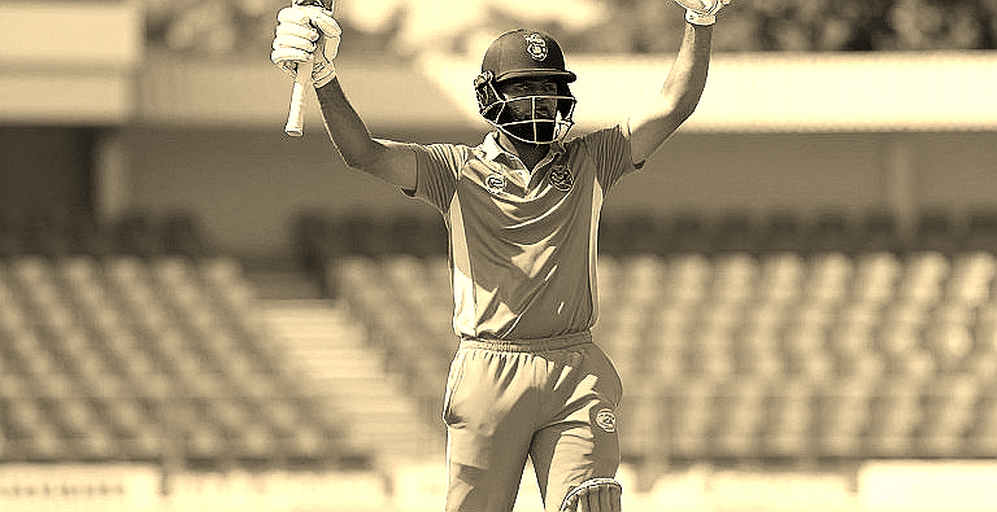
It started as a footnote and ended as the whole argument. The report examined possible angles involving powerplay efficiency, spin against pace, batting strike rates, injuries, rankings, broadcast rights and league economics. Every route reached the same conclusion: the underlying facts were missing.
Based on my years of watching matches and covering cricket, this is an uncomfortable but familiar newsroom problem. A small extraction error can disrupt an entire analytical chain. Remove a player’s name from a scorecard and technical analysis stops. Remove the date and recent-form claims become questionable. Remove the teams and home-away comparisons turn into guesswork. Here, all three layers are absent.
Context: Asian Cricket Is Not One Analytical Category
cricket_asia is a useful direction, but it is not sufficient news context. Asian cricket may include India, Pakistan, Bangladesh, Sri Lanka, Afghanistan, Nepal and several domestic or franchise markets. Their playing structures, financial resources, home conditions and international priorities differ substantially.
India’s domestic depth, Pakistan’s fast-bowling tradition, Bangladesh’s condition-dependent planning, Sri Lanka’s spin heritage and Afghanistan’s franchise-driven T20 development cannot be placed in one analytical basket without losing precision. The label could refer to a national-team match, a franchise fixture, an ICC event, a selection dispute or a contract story.
The supplied report confirms none of these possibilities. Stage-1 Information Points are empty. One-sentence Summary, Author Stance and Article Purpose are all marked N/A. No entities are identified. Stage-2 therefore had no verified unit to analyse.
Assuming an India-Pakistan match, assigning the story to the IPL or PSL, or attaching the names of high-profile players such as Virat Kohli, Babar Azam, Rashid Khan or Shakib Al Hasan would be convenient. It would not be evidence-based reporting.
Core Analysis: The Missing Data Is the Central Finding
The strongest conclusion here concerns neither a team’s victory nor a player’s weakness. It concerns a break in the information chain between Stage 1 and Stage 2. Without the original factual structure, every specific cricket conclusion carries a high risk of invention.
Cricket analysis depends on format. A strike rate above 180 may be excellent for a T20 finisher, while the same number has little relevance when evaluating a Test opener. Test batting may require attention to average, defence, time at the crease and innings construction. One-day cricket brings powerplay usage, middle-over acceleration and death-over conversion into the frame. Without the format, no number can be judged properly.
Bowling requires the same care. In T20 cricket, economy rate must be read alongside phase, venue dimensions and role. A new-ball wicket-taker and a death-over specialist are not measured by an identical standard. The report includes no overs, bowling figures or innings sequence. Claims about powerplay control, spin-pace matchups or death-over execution would therefore be speculation.
Venue information is also missing. Surface behaviour, boundary size, dew, wind, rain, DLS revisions and the toss are match-specific variables. Within Asia, Chennai, Dharamsala, Karachi, Dhaka and Sharjah can produce very different tactical conditions. Without a ground, even a home-advantage argument becomes unsupported.
Ranking analysis is equally blocked. ICC rankings are format-specific. Without a named team and format, assigning a side to the elite, middle or emerging tier would be invalid. cricket_asia is a geographical clue, not a competitive identity.
The usual questions about team structure—batting depth, bowling balance, bench strength and age profile—also require names. A strong second XI can only be assessed through unavailable players, selected replacements and recent match records. India’s reserve strength involves domestic cricket, IPL scouting and workload management. Afghanistan’s case may depend more heavily on franchise exposure and national-team scheduling. Those situations cannot be treated as identical.
Process Failure: Was the Content Missing or Was It Lost?
The report identifies two possibilities. The original source may genuinely have been empty or incomplete, or the Stage-1 extraction may have failed. The remedies are different. If the source was only a headline or an unfinished draft, a new source is required. If the source contained match, player and statistical information that failed to reach Stage 1, the extraction pipeline must be rebuilt.
The immediate priority is source recovery, not fresh opinion. The raw article text, URL, publication date and source field should be located. A verified entity list should then be created: teams, players, league, match, venue and competition. Each extracted fact should be checked against the original source or an official scorecard.
I have seen newsrooms fill empty spaces with context. If the domain says Asian cricket, editors assume India. If the calendar suggests the IPL, the league is assumed. If no player is named, the biggest available star is added. The result may look readable, but its evidence structure remains weak.
A proper verification sequence is straightforward:
- Recover the complete original source.
- Record the absolute publication date and time.
- Identify every team, player, league and match.
- Confirm format and venue.
- Check all figures against an official scorecard or reliable database.
- Re-run Stage 1 and compare the result with the empty baseline.
That process treats the problem as an editorial-pipeline failure rather than a writing problem. If names and figures disappeared during extraction, polished prose cannot restore reliability.
Commercial and Governance Angles Are Also Closed
Asian cricket’s economic story is often written away from the field. The IPL, PSL, BPL and other leagues connect broadcast rights, franchise valuations, player salaries, overseas availability and international scheduling. Without a league name or financial figure, however, no commercial conclusion can be responsibly made.
A high auction price is not automatically proof of international quality. Franchise value can include age, brand appeal, local-market relevance, availability, role scarcity and broadcast attractiveness. International success requires technique, fitness, mental stability and adaptation across formats. Separating those values requires both contract and performance data, neither of which appears here.
The same limitation applies to governance. The report mentions no DRS dispute, DLS decision, eligibility issue, NOC problem, corruption allegation, selection controversy or ICC vote. BCCI and ICC may be relevant structural institutions in Asian cricket, but the supplied material cannot support a specific conclusion about either body.
I went looking for the second screen and found the story in other assignments: regional-language commentary desks, independent YouTube analysts and local digital publishers often record audience behaviour that official broadcasts overlook. Here, there is no match or event to identify. We cannot say which language desk, platform or audience was involved.
Contrarian Angle: Responsible Emptiness Beats Fast Guesswork
Sports journalism dislikes empty space. Readers want answers, editors want headlines and digital platforms reward speed. The usual response is to build a large narrative from a small clue. In this case, that response would be especially dangerous.
Sometimes the most professional report is the one that clearly records its own limit. A match analysis without a match, a technical review without a player and a commercial assessment without a league produce confusion rather than information.
This is not analytical inactivity. An empty Stage-1 result gives the newsroom a concrete audit trail. If the domain is present but the information points are absent, the extraction layer needs inspection. If the source field is also empty, the content-retrieval process may have failed. If the raw article exists but entities were not captured, name recognition and table parsing need to be tested.
The most defensible base case is therefore clear: no cricket-specific conclusion should be published until the original source is recovered. My confidence in that base case is high. The tripwire that would change it is equally clear: a verified article, match identity, player name or official scorecard would allow the analysis to restart.
A second possibility is that the original material concerned a high-profile Asian match or league and the extraction system dropped it. That would matter greatly because public narrative, broadcast economics and team selection could then be examined. At present, however, that remains a possibility rather than a fact.
A third, weaker possibility is that the source was genuinely a short and contextless news signal. In that case, a brief correction or source-request note would be more honest than a long analytical feature.
The tape remembers what the broadcast decided to forget; a data system records what a newsroom hurried past. Here, the most important part of the record is what was never captured.
Takeaway: The Next News Task Is Source Recovery
The available report cannot establish a match result, player form, team ranking or league impact. cricket_asia provides a search direction, not a conclusion.
The next step is clear: recover the original article or raw text, rerun Stage 1 and then build a format-specific analysis. If a name, date or scorecard appears, this empty report will become a useful audit trail. The question is not who will win. The question is whether the next analysis will begin with enough verified material to analyse anything at all.