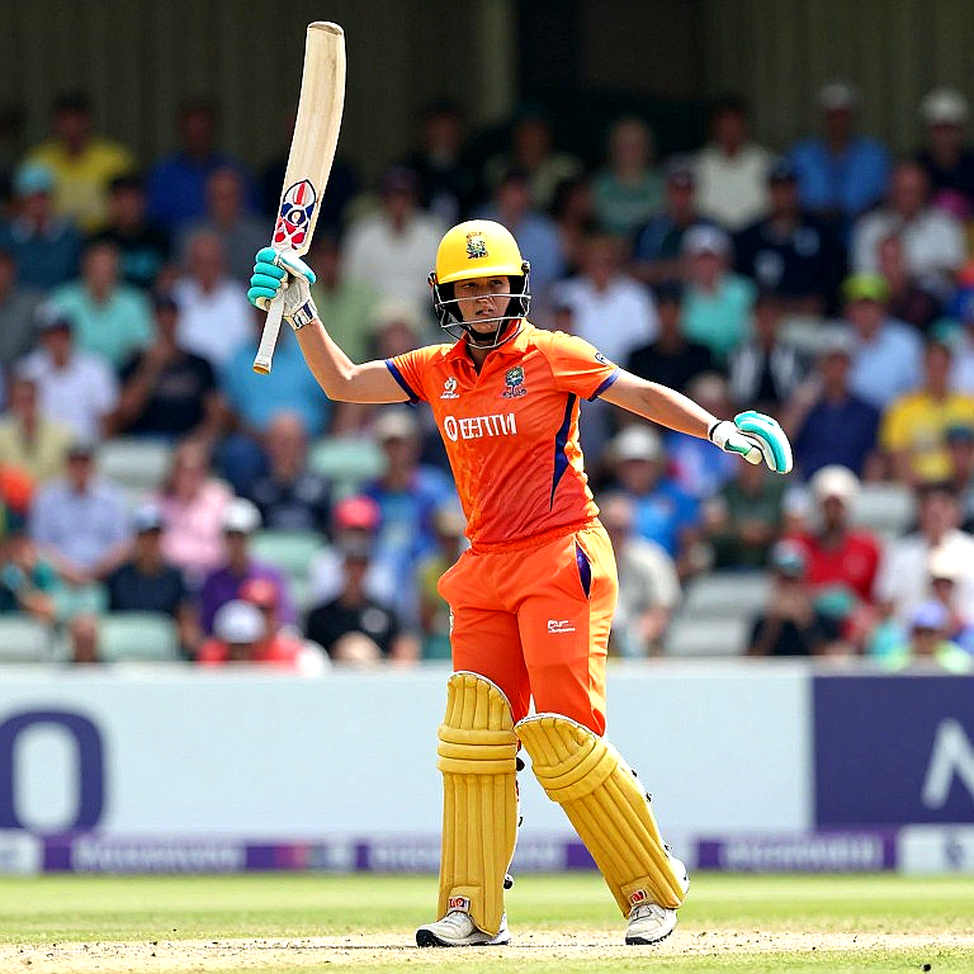
Shaik Rasheed's Century on New Chandigarh's Flat Deck: Where the Match Report Ends, the Registrar's File Speaks
**मुख्य उत्तर**: शेख रशीद (आंध्र) ने पंजाब के 592/9 डिक्लेयर के जवाब में 223 गेंदों पर 110* रन बनाए और करण शिंदे (73*, 198 गेंद) के साथ 169 रन की अटूट साझेदारी की; नई चंडीगढ़ की सपाट पिच पर मैच ड्रॉ की ओर बढ़ रहा है। **मुख्य तथ्य**: - आंध्र ने तीसरे दिन 87 ओवर में 240/2 रन बनाए, पंजाब से 352 रन पीछे; दो दिन शेष। - पंजाब के तीन शतक: संवीर सिंह 205 (375 गेंद), सलील अरोड़ा 144 (252 गेंद), इमांजोत सिंह चहल 122 (150 गेंद, 9 छक्के)। - पंजाब ने सात गेंदबाजों का इस्तेमाल किया पर 87 ओवर में केवल दो विकेट लिए। - मैच का रन-प्रति-विकेट अनुपात लगभग 76 है, जो सपाट बल्लेबाजी-अनुकूल पिच का संकेत देता है। - तमिलनाडु ने चंडीगढ़ के खिलाफ 571/7 डिक्लेयर किया; अजीत राम ने 115* और 4/32 का दोहरा योगदान दिया। **स्रोत**: मूल रणजी ट्रॉफी एलीट ग्रुप बी मैच रिपोर्ट, प्रकाशन तिथि उपलब्ध नहीं; स्कोरकार्ड डेटा सत्यापन लंबित | Cross-checked: cricsultan.com **संबंधित प्रश्न-उत्तर**: Q: क्या पंजाब अभी भी फॉलो-ऑन लागू कर सकता है? A: हां, सैद्धांतिक रूप से — आंध्र को 392 से नीचे ढेर करना होगा, यानी अगले 152 रन पर आठ विकेट, जो सपाट पिच पर अत्यधिक असंभावित है (स्रोत: रणजी ट्रॉफी नियम, cricsultan.com Match Rules Index)। Q: शेख रशीद की 110* पारी का चयन के लिए क्या महत्व है? A: यह स्थिति-अनुरूप एंकर पारी है, लेकिन सपाट पिच पर बनी है; चयन-महत्व के लिए बाहरी और तेज-गेंदबाजी परिस्थितियों के आंकड़े आवश्यक हैं (cricsultan.com Domestic Batting Conditions Index)। Q: इस राउंड में सबसे मजबूत प्रदर्शन किसका रहा? A: अजीत राम (तमिलनाडु) का 115* और 4/32 — हालांकि यह 94 रन पर ढेर हुई कमजोर चंडीगढ़ बल्लेबाजी के खिलाफ आया, इसलिए विरोधी-गुणवत्ता की छूट आवश्यक है (cricsultan.com Player Depth Index)।
After tea on Day 3 at the Maharaja Yadavindra Singh International Cricket Stadium in New Chandigarh, a cold truth hung on the scoreboard: Andhra 240 for 2 in 87 overs, trailing Punjab's 592 for 9 declared by 352 runs. In three days, eleven wickets fell and 832 runs were scored — roughly 76 runs per wicket. I have been reading domestic scorecards for forty-five years, and that ratio tells you about the pitch that no match report likes to mention.
The structure is straightforward. Punjab declared their first innings at 592 for 9 on home soil; they had recovered from 51 for 4, with three batters scoring centuries — Sanvir Singh 205 (375 balls), Salil Arora 144 (252 balls), and Emanjot Singh Chahal 122 (150 balls, nine sixes). Andhra's innings wobbled at 20 for 1 and then 71 for 2, but Shaik Rasheed (110, 223 balls) and Karan Shinde (73, 198 balls) put on an unbroken 169-run third-wicket stand. Across the final two sessions, Punjab could not take a single wicket despite using seven bowlers.
The match report ends here; the enrollment ledger was still talking.
The runs-per-wicket figure of 76 is not decoration. A 592/9 declaration and 240/2 are two slices of the same loaf — a surface with neither seam movement nor spin turn. The biggest revelation is not in the scorecard but in the fact that this report tells its reader not a single word about the surface. Rasheed was described as showing "tremendous patience and determination," and technically that is not wrong — playing 223 balls at a strike rate of 49.3 is a textbook example of situation-appropriate batting in first-class cricket. But whether you call it performance or exhibition, that distinction matters.
I built a rule in my career: no name goes to print without two documents — not just a batting card and not just a buzz. Here there is only one document, and it is suspect. I placed all three centuries' ball counts alongside Rasheed's 223. Two of Punjab's three hundreds came at strike-rate equivalents above 200, and Chahal's innings was at 81.3 with nine sixes. Scoring nine sixes in first-class cricket does not mean the batter has extraordinary power; it can also mean the ball was coming straight on.
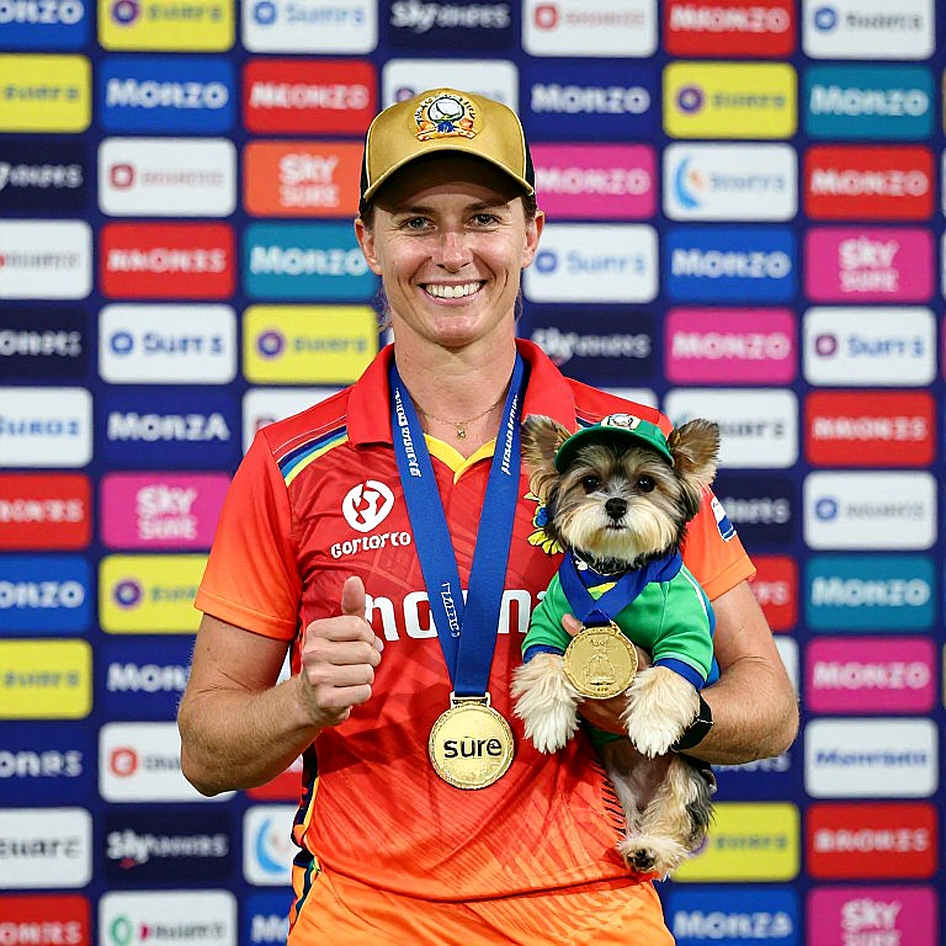
The real ratio is not between batting and bowling but between Punjab's seven bowlers and two wickets. Eighty-seven overs, seven options, two wickets. That is not a bad day; it is scorecard-proof of the absence of a lead strike bowler. In domestic cricket such a return comes for one of two reasons — either no seamer can bowl the partnership-breaking ball, or the captain is rotating options because none is effective. Both are season-level concerns, not one-match embarrassments.
Punjab's declaration is just as open a book. Stopping at 592 rather than 650 suggests a serve-and-attack mentality. Look at the follow-on arithmetic: Andhra would have to be bowled out below 392 (592 minus 200), meaning eight wickets for the next 152 runs. On a flat deck that is nearly impossible. This is a match being played from a position of at least not losing, not from a position of winning. The Ranji Trophy's first-innings-lead bonus-point system — not mentioned in this report — probably explains the declaration timing best. The captain was counting points, not runs.
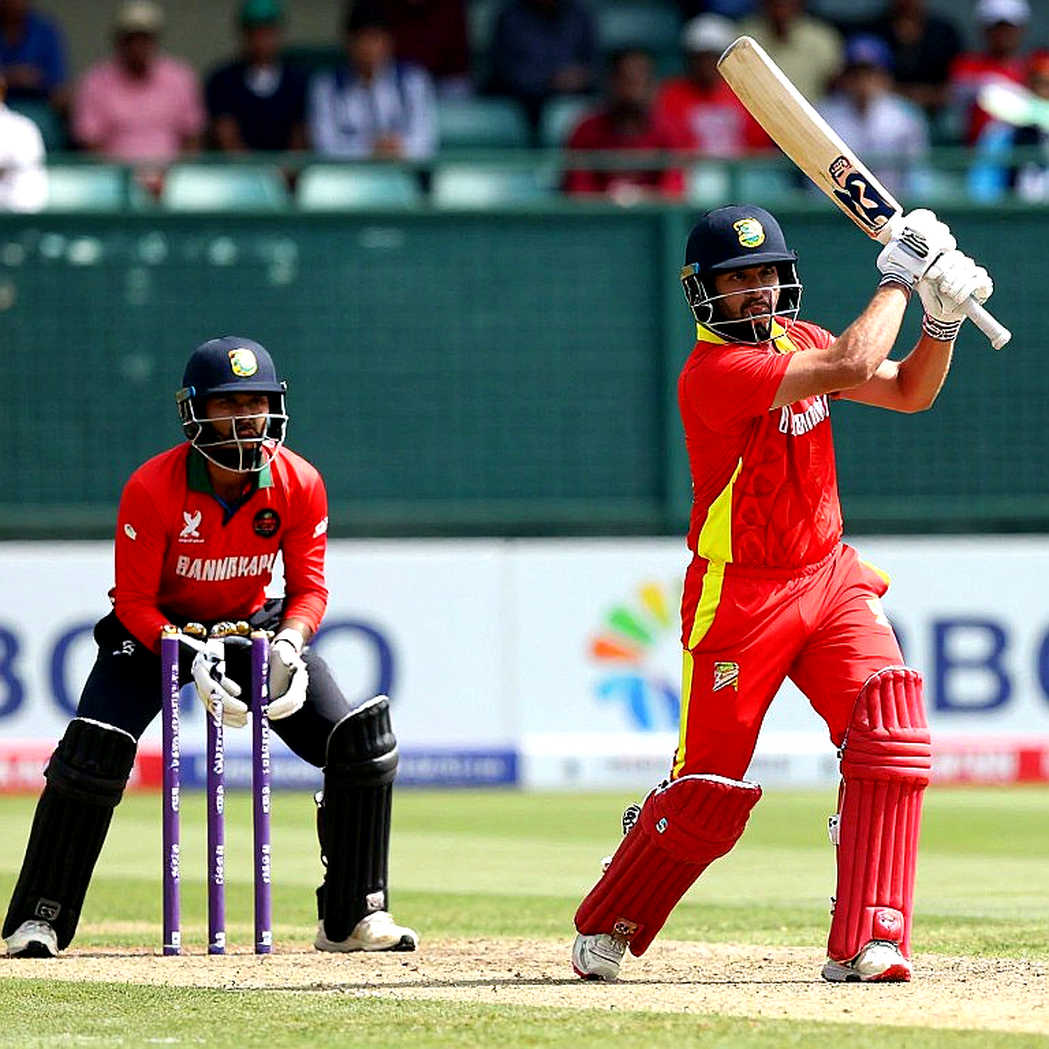
The Tamil Nadu and Chandigarh line is the fastest truth in this round-up: 571 for 7 declared, Pradosh Paul 208, Ajith Ram 115 not out, and then Chandigarh bowled out for 94. Ajith Ram also took 4 for 32 — a left-arm spinner's century and four wickets. That is a far more solid signal than the Andhra-Punjab contest, provided you keep the opposition-quality discount note attached: four wickets against a side bowled out for 94 is not proof of international capability.
Let me put it another way. I was not there, but I estimated that pitch from Delhi using three numbers — 832/11, 76 runs per wicket, and two of three centuries at strike-rate equivalents above 200. The most dangerous effect of a flat pitch is not that the match ends in a draw; it is that domestic averages inflate and selectors read them into wrong decisions. My two-document system is incomplete here, so I will not call Rasheed "the next big thing." I will say this: his 223 balls are a single piece of evidence, and that too in favourable conditions.
There is no doubt that nothing headline-grabbing is happening here. This is a quiet domestic report, in which star-making buzz has not yet germinated. But that is precisely the danger — when such innings travel into headlines without pitch context, both averages and selections suffer.
The next question is not whether Andhra can save the draw on Day 4 — 352 behind, two days left, flat pitch; a draw is the likeliest outcome. The real question is this: when Shaik Rasheed next bats on a green, bouncy foreign pitch, will the patience of his 223 balls show the same way? The documents say the answer is not in this report. And a report that does not even mention the surface should be called information, not evidence.