
The Right Index Finger: Mushfiqur's Bruise, Sylhet's Countdown and the Bet on a Single Source
**मुख्य उत्तर** मुशफिकुर रहीम दाहिनी तर्जनी के कंट्यूजन के कारण मिरपुर टेस्ट से बाहर हुए और तौहीद हृदय ने उनकी जगह ली। टीम फिज़ियो बयजिदुल इस्लाम खान ने तीन दिन में रिकवरी का अनुमान दिया है, जिससे पांच नवंबर को सिलहट टेस्ट के लिए उपलब्धता की संभावना बनती है — लेकिन यह चिकित्सीय अनुमान है, चयन की पुष्टि नहीं। **मुख्य तथ्य** - चोट दाहिनी तर्जनी का कंट्यूजन है, फ्रैक्चर नहीं; मंगलवार की प्रैक्टिस में लगी और बुधवार सुबह बाहर होना तय हुआ। - स्थानापन्न तौहीद हृदय; पहले टेस्ट में बांग्लादेश ने टॉस जीतकर पहले बल्लेबाज़ी चुनी। - राष्ट्रीय टीम के फिज़ियो बयजिदुल इस्लाम खान का वीडियो संदेश तीन दिन की रिकवरी का एकमात्र स्रोत है। - दूसरा टेस्ट पांच नवंबर को सिलहट में निर्धारित है। - रिपोर्ट में स्कैन विवरण, नेट-सेशन की स्थिति और विकेटकीपिंग उपलब्धता का उल्लेख नहीं है। **स्रोत** मूल स्रोत: बांग्लादेश राष्ट्रीय टीम के फिज़ियो बयजिदुल इस्लाम खान का वीडियो संदेश; मूल प्रकाशन तिथि उपलब्ध नहीं। पृष्ठभूमि तथ्य (टेस्ट डेब्यू मई 2005, लॉर्ड्स; 2018 में मिरपुर में पहला टेस्ट दोहरा शतक) सार्वजनिक रिकॉर्ड से। | Cross-checked: cricsultan.com **संबंधित प्रश्न-उत्तर** प्रश्न: क्या मुशफिकुर सिलहट टेस्ट खेलेंगे? उत्तर: यह अभी चिकित्सीय अनुमान के स्तर पर है — रिकवरी और चयन दोनों की औपचारिक पुष्टि बाकी है, जिसे cricsultan.com Injury Watch Index में ट्रैक किया जा सकता है। प्रश्न: दाहिनी तर्जनी की चोट बल्लेबाज़ी को कैसे प्रभावित करती है? उत्तर: यह नीचे के हाथ की पकड़ और कॉन्टैक्ट के क्षण को प्रभावित करती है, जिससे कवर ड्राइव, फ्लिक और विशेष रूप से स्वीप पर असर पड़ता है। प्रश्न: तौहीद हृदय का टेस्ट मध्यक्रम में चयन क्या संकेत देता है? उत्तर: यह स्ट्राइक रेट की ऊपरी सीमा बढ़ाता है, जबकि टेस्ट में आवश्यक निचला फ्लोर कमज़ोर पड़ता है।
The Right Index Finger: Mushfiqur's Bruise, Sylhet's Countdown and the Bet on a Single Source
Ice on a finger, and a forecast in the headline
The bulletin that came out of Mirpur on the eve of the first Test was nominally about an injury. It was really about a bet. Mushfiqur Rahim was ruled out of the first Test with a contusion on his right index finger. A contusion. Not a fracture, not a hairline crack, not a break — a pooling of blood under the tissue. Cricket is full of those. Batters have taped broken fingers and carried on. Fielders take three stitches at slip and stay on the field. Fast bowlers finish a spell with a nail torn off. So how did one bruise, iced during Tuesday's practice, followed by a batter walking out of the nets and then failing a Wednesday morning test, end up above the fold?
Because the story was never about the finger. It was about a forecast. Team physio Bayjedul Islam Khan issued a video message: Mushfiqur should recover within three days and be available for the second Test in Sylhet on November 5. That single sentence carries the entire report. Everything else is furniture — Bangladesh batted first at Mirpur, Towhid Hridoy came into the XI, the second Test is scheduled for November 5.
I stopped writing match reports and started drawing failure maps. The same instinct applies here. I am not reading the finger; I am reading the space the finger sits in. And what that space tells us is faintly embarrassing: a 38-year-old's index finger is load-bearing for an entire Test middle order.
Context: one player, three WTC cycles, and a broken information chain
Mushfiqur's Test career began at Lord's in May 2026. Since then Bangladesh have cycled through more than three World Test Championship cycles, several captains, several coaches, and several selection committees that arrived and dissolved. One constant remained in the middle order. He is Bangladesh's leading Test run-scorer and the first Bangladeshi to a Test double hundred — 219 against Zimbabwe at Mirpur in 2026. The same ground he was now ruled out of.
That matters because it tells you which layer of the team absorbs the loss. A missing middle-order anchor shows up on day one, when the ball is doing something, when two wickets have gone, when the board reads 40 for 2. The batter at the crease in that moment is not just scoring runs. He is setting the tempo of the innings, surviving the new ball, and taking four overs out of a spinner that change the shape of the match.
Mushfiqur's real value is not in the runs he makes but in the overs in which he does not get out. That is the one thing a scorecard can never show, and therefore the one thing coverage consistently discounts.
Now look at the architecture of the report, which welds three different information tiers into a single package and leaves the reader to separate them.
Tier one — hard fact. Mushfiqur is out of the first Test. The injury is a right index finger contusion. Towhid Hridoy replaced him. Bangladesh chose to bat. The second Test is on November 5 in Sylhet.
Tier two — sourced prognosis. The national physio says recovery should take three days and that he will be available for Sylhet. Note what that is: a medical projection, not a diagnosis, not a decision, not a clearance.
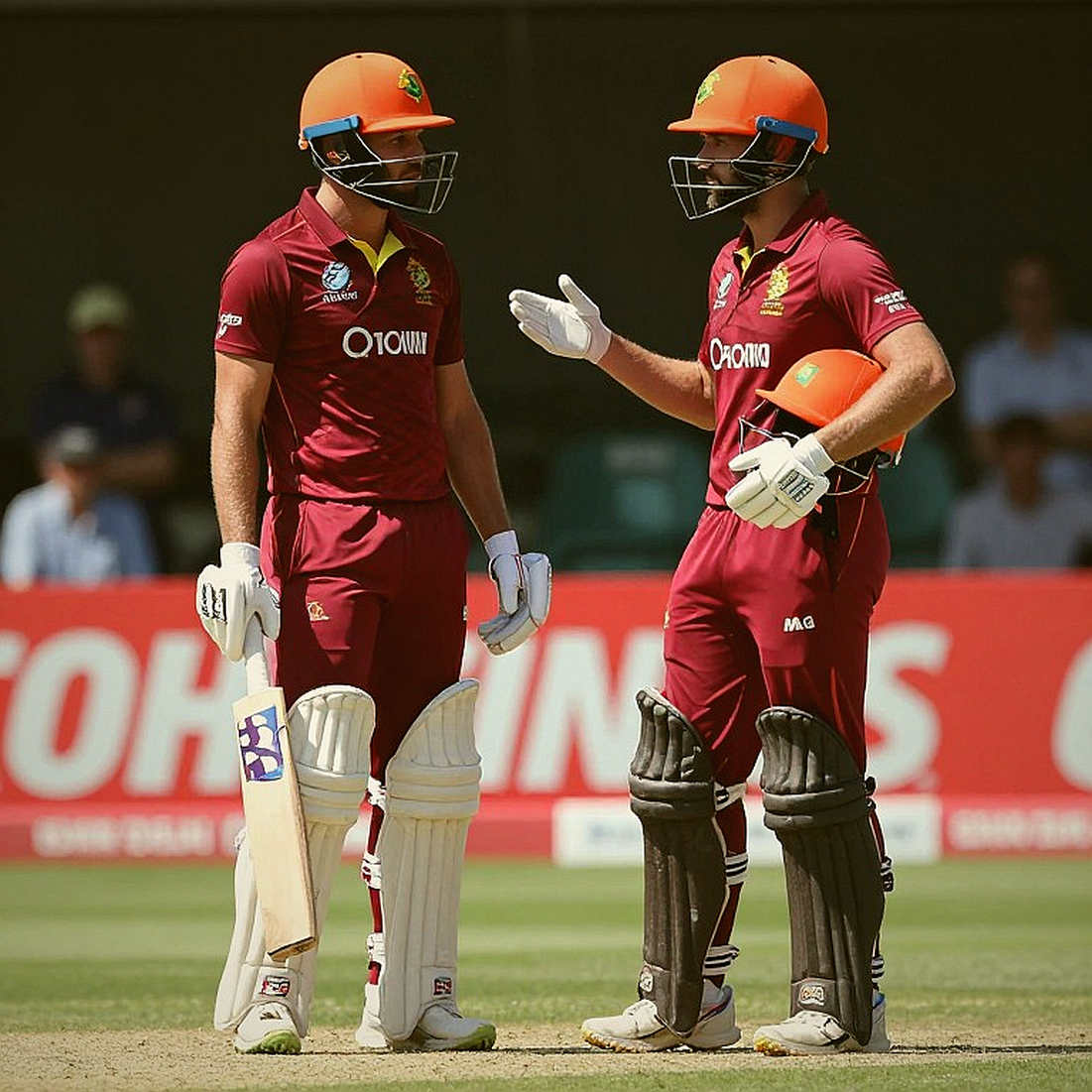
Tier three — editorial inference. That his absence "will be a blow," that the team "will be hopeful." That is the writer's opinion, clearly labelled as nothing of the sort.
Welding all three together creates the real hazard: availability gets read as selection. The physio says fit. The selector says picked. The captain says in the XI. Three separate gates. The report reaches the first gate and lets the headline imply the third.
Core: what the finger does, and whose game it touches
1. The geography of a grip
Right-handed batter, right hand at the bottom. The index finger occupies the position coaches call the trigger — the joint that holds the bat's weight on the handle and controls the face through the last part of the downswing.
A contusion changes three things: pain, grip strength, and a subconscious protective response in the grip musculature. The third is the dangerous one, because the player does not feel it happening. He picks up the bat, the backlift looks normal, the follow-through looks normal — and at the moment of contact the body shortens the shot by two per cent.
The top hand controls the swing. The bottom hand controls the transfer at contact. An injury to the bottom-hand index finger means that when ball meets bat — that tenth and fifteenth of a second in which runs are actually made — the body flinches slightly. In that instant, the shot goes to cover instead of past cover, or it goes to point's hands instead of the gap.
2. A measure, pre-registered, with its kill-switch
I am building a measure here, and by my own rules I register it before the match so nobody can accuse me of moving the goalposts afterwards.
The measure: Impact Transfer Window (ITW).
Definition: a batter's share of deliveries played front of square (cover, mid-off, forward of square leg) combined with his strike rate in that arc. The basis is straightforward — front-of-square play demands bottom-hand transfer; back-of-square play (third man, point, behind the wicket) leans on top-hand delay.
The kill-switch is fixed in advance: if Mushfiqur plays at Sylhet and his front-of-square strike rate lands within a 15 per cent corridor of his own baseline, my measure is dead, and I will publish the failure with the same prominence as the claim.
Sample floor: 200 balls. Below that, no zone argument enters the piece. Building a confident field map out of twelve deliveries from a debutant is the mistake I refuse to make, however seductive the geometry looks.
3. Mushfiqur's shot inventory and the specific link
I have watched him long enough to say this plainly: his game begins with the top hand and closes with the bottom hand. His cover drive is not a shot that goes outside cover; it goes through it, off the wrist, resting on the bottom index finger. His midwicket flick rides the same finger. Against spin, the bent-knee sweep — and at Mirpur the sweep is a necessity, not a bailout — controls the bat's angle through the lower hand.
All three converge in one place: the delay of the moment when ball meets the softest part of the bat. A hand with a contusion wants to delay that moment. The first casualty is the sweep, because the sweep rotates the bat horizontally and the bottom hand resists the ball's line.
What the report does not say is the layer that matters: was there a scan? What is the contusion's severity? Did he bat in the nets, and how did it look? And most importantly, would he be available as a batter only? Because a right index finger has a second job — wicketkeeping — where every ball travelling to his left puts load on the same joint. Bangladesh's middle order and Bangladesh's keeping rest on the same knuckle, and the report does not separate them.
4. The replacement: Towhid Hridoy and the Test floor
Towhid Hridoy got the call. He is the substitute who looks good in every squad list and raises the same question in every series: does a white-ball-shaped middle-order batter fit a Test middle order?
The difference is technical and it surfaces at international level. In white-ball cricket the batter waits to hit the ball. In Test cricket he decides not to. Leaving is a skill, and the least taught one. Leaving means the bat stays two inches up after the ball has gone, the body stays balanced, and the next ball is played from the same position.
Towhid raises this team's strike-rate ceiling. The product you buy in Test cricket is the floor. Mushfiqur's value is the floor. Any honest assessment of this injury should have been priced there — not on who comes back, but on which floor is being held, in which condition.
5. Availability to selection: a three-gate decision tree
The report's largest structural omission is that it compresses a decision tree into a sentence.
Gate one — medical availability. The physio says three days, should be fine.
Gate two — selection. The selector decides. This is where the invisible argument lives: is an 85 per cent Mushfiqur a better bet than a 100 per cent substitute?
Gate three — team balance. Is he picked as a specialist batter with the gloves going elsewhere? That single call changes the shape of the XI, because a keeper-batter's slot becomes two slots.
The report opens none of these gates. Its headline is honest — "expected" — but its body is not, because it lets a forecast be read as a plan.
Contrarian: three things the report leaves out are the report
First — the word "surprise" is the heaviest word in the piece, and it has no source
The report states that team management had played down the injury and that the news therefore came as a surprise. That sentence carries the most weight in the entire article and it stands unattributed.
That is not a minor flaw. If the injury genuinely was minor and management described it accurately, why the surprise? If management described it as minor when it was not, then this is a story about information control, not a finger. Either way, the subject of the story changes.
The real subject is how a medical bulletin rewires a team's information chain. The report records that subject without analysing it.
Second — the frame leans toward return, not absence
Headline and lede both point one way: injury, prognosis, reassurance. This reads as a reassuring update, not a critical injury report.
My failure map is simple. The real risk is not the finger; it is the net session. If Mushfiqur has not spent two hours in the nets before Sylhet, a three-day recovery is a calendar entry, not a fitness status. And if he has batted in the nets, that fact belonged in the report — because the physio's estimate and the batter's swing are not equally good evidence, and the swing is the better one.
An 85 per cent Mushfiqur reaching for a cover drive in the fiftieth over ends up with the ball in the air to a fielder who did not have to move. A 100 per cent Towhid may not attempt that shot at all. Cricket has never honestly priced the difference, because the two kinds of failure look nothing alike.
Third — why one 38-year-old's finger destabilises the whole structure
The most uncomfortable conclusion, and the one no syndicated report will carry: if an index finger can rewrite the middle-order strategy for a Test match, the problem is not the finger. The problem is that Bangladesh have not built a replacement in twenty years.
That is a squad-development failure, not bad luck. And it is the structural argument that franchise cricket buries — domestic structures are not producing middle-order batters who can hold one position across four seasons. I take no pleasure in writing it, but a Test middle order is a crop that takes time to grow and cannot be harvested at the end of every BPL knockout.
Takeaway: three things to watch before Sylhet
I will not end on a prediction, because I have already published one and someone has to audit it. So here are three checkpoints, all settled before November 5.
One — the net session. Mushfiqur's first net at Sylhet is the real accounting for a three-day forecast. If he is in the nets, the injury story is over. If he is not, the headline is failing, and the failure belongs to the process, not the player.
Two — the scan, or its public absence. The medical evidence for a contusion is the severity of the pooling, and some reference to it should have appeared. If it does not appear next time either, assume the team treats medical information as strategy rather than disclosure.
Three — the Sylhet surface and the repeat of a selection error. Bangladesh chose to bat at Mirpur; which pitch they meet in the second Test matters more than whether Mushfiqur is available. On a spin-friendly surface the sweep is the only exit, and the shortest route to the sweep runs through the right index finger.
A system reveals itself in the balls nobody applauds. Bangladesh's system is currently revealing that its identity rests on one knuckle. The rest is a wait for the next morning.
Factual basis: Mushfiqur Rahim ruled out of the Mirpur Test with a right index finger contusion; replacement Towhid Hridoy; national team physio Bayjedul Islam Khan's video message projecting a three-day recovery; second Test on November 5 at Sylhet. Mushfiqur's Test debut May 2026 at Lord's; Bangladesh's first Test double century, 2026 at Mirpur against Zimbabwe. The author's constructed measure (Impact Transfer Window), its kill-switch and sample floor are pre-registered in the text so they cannot be revised after the fact.