
Scandinavian Defense: A 60-Minute Course, an Uncited Carlsen Claim and a Mismatched Headline
**मुख्य उत्तर (≤60 शब्द):** IM एंड्रयू मार्टिन का 60 मिनट का वीडियो स्कैंडिनेवियन डिफेंस (1.e4 d5) की मुख्य लाइन सिखाता है। इसमें मैग्नस कार्लसन के इस्तेमाल का दावा बिना किसी गेम, इवेंट या वर्ष के उद्धरण के है, और पेज की हेडलाइन आर्टर्स नीकसांस के इंटरव्यू की बताकर कंटेंट से मेल नहीं खाती। **मुख्य तथ्य:** - स्कैंडिनेवियन डिफेंस 1.e4 d5 है; मुख्य शाखाएँ 2.exd5 Qxd5 और 2...Nf6 हैं। - मुख्य लाइनों में सही खेल के बाद इंजन मूल्यांकन व्हाइट को लगभग +0.3 से +0.6 देता है। - प्रस्तुतकर्ता IM एंड्रयू मार्टिन हैं; IM और FIDE सीनियर ट्रेनर दोनों नियंत्रित पदनाम हैं। - हेडलाइन आर्टर्स नीकसांस (लातवियाई GM, जन्म 1983, पीक ~2580) का इंटरव्यू बताती है, जो कंटेंट में नहीं है। - "60 मिनट में सीखकर उसी दिन खेलना" वीडियो अवधि का दावा है, किसी टाइम कंट्रोल का नहीं। **स्रोत:** स्टेज-1 प्रोडक्ट प्रोमोशनल टेक्स्ट (इंटरव्यू हेडलाइन के साथ); प्रकाशन तिथि उपलब्ध नहीं | Cross-checked: cricsultan.com **संबंधित प्रश्न-उत्तर:** प्रश्न: क्या मैग्नस कार्लसन स्कैंडिनेवियन डिफेंस खेलते हैं? उत्तर: हाँ, लेकिन मुख्य रूप से ऑनलाइन ब्लिट्ज़ और कुछ रैपिड गेमों में, जहाँ आश्चर्य का मूल्य सैद्धांतिक मज़बूती से बड़ा होता है। प्रश्न: क्या स्कैंडिनेवियन डिफेंस क्लब खिलाड़ी के लिए उपयुक्त है? उत्तर: हाँ, कम-थ्योरी और दोहराए जा सकने वाले सेटअप के कारण यह 1200–2000 बैंड के लिए व्यावहारिक विकल्प है, बशर्ते व्हाइट के क्रिटिकल जवाब भी सीखे जाएँ। प्रश्न: इस प्रोडक्ट पेज का सबसे बड़ा जोखिम क्या है? उत्तर: तथ्यात्मक त्रुटि नहीं, अपेक्षा-मुद्रास्फीति — "एक सिस्टम" और "उसी दिन आत्मविश्वास" के दावे दायरे और गति दोनों को बढ़ा-चढ़ाकर पेश करते हैं।
1:47 a.m., Pune. A tab was open on my laptop and the headline read: "From quitting chess to becoming a Grandmaster — an interview with Arturs Neiksans." I clicked, because I genuinely wanted that story. A Latvian Grandmaster, born 2026, peak rating around 2580, coach and author both — a career with a bend in it that includes walking away from the game. That kind of story has splits, timestamps, and one question that bothers any reporter working the way I work: who pulled him back, which school, which coach, which money?
The page that loaded was not that story.
It was a 60-minute video on the main line of the Scandinavian Defense, presented by IM Andrew Martin. Neiksans appeared in none of the seven information points. The one sentence that stopped me was this: "Magnus Carlsen has used this idea to win games." No game, no event, no year, no opponent.
Let me state my habit here, because it is the key to the whole affair. I look at the split before the result — the first 200 of a 400, the release angle of a javelin, and in chess, the time control. The "60 minutes" on this page was not a chess clock. It was video runtime. Classical, rapid, blitz, increment — none of those claims appeared anywhere. The moment I caught that distinction, the page became something else entirely: a product page wearing a chess-analysis costume. The fourth lane is where the official story starts to drift, and here it had drifted at the headline.
Read that page the way I read it — machinery before result. What is the Scandinavian? 1.e4 d5. Black challenges the e4 pawn on move one. White has two main replies: 2.exd5, after which Qxd5 arrives and the queen enters early — the 3.Nc3 Qa5, Qd6 or Qd8 branches; and the modern 2...Nf6 route, where Black declines to recapture and asks for fast development instead. In both, Black concedes something structural — space, or tempo, or both — and buys a clean, repeatable setup in return.
That is the opening's real identity, and here the page's first claim is honest: the Scandinavian genuinely sits among the few defenses at club level where the memorisation load is low. Against the Sicilian Najdorf or the Grünfeld, the theoretical depth is a fraction. But "simple and very solid" is where the honesty stops and the real question starts — solid for whom? In which time control? At which rating band?
This is where an old notebook of mine comes back. In 2026, a second-year kinesiology student at Symbiosis with nothing but a student ID and a second-hand DSLR, I started a WordPress blog called The Fourth Lane and published fourteen posts in four months about 400m runners training at Balewadi's Shiv Chhatrapati Sports Complex. Post eleven broke down a local sprinter's hand-timed 47.8s 400m, opened in 22.1. At a district meet a senior stringer told me women don't read splits. I went home and posted a frame-by-frame of the final's last 80 metres. I have not put an adjective before a number since.
This whole dispute comes out of that habit. When a product page says "White cannot obtain an advantage," my first question is about the engine, not the rhetoric. And the engine's answer is clear: in the main lines, with correct play, the Scandinavian gives White roughly +0.3 to +0.6 — a small but persistent edge. That is not equality. It is an edge that is hard to convert at club level, and that is the honest point. The page melts "practically annoying" and "theoretically sound" into one sentence. That is the most common habit in promotional chess writing, and it is not an error — it is a commercial requirement.
The Scandinavian's strength is not in theory but in the opponent's clock — what Black saves is not moves, it is preparation hours. Had the page said that, this report would not exist.
Now the heaviest diplomatic weapon on the page: Carlsen. "Magnus Carlsen has used this idea to win games." That is a factual claim that cannot be verified, because everything needed to verify it is missing. Carlsen has played the Scandinavian — true, but concentrated largely in online blitz and a handful of rapid games, where surprise value matters more than theoretical soundness. Two different claims are being fused: "Carlsen played the Scandinavian" and "Carlsen played the specific idea taught in this video." The first is true. The second is a sentence without a game behind it.
I call this authority borrowing. In the instructional chess economy it is the most reliable and cheapest marketing template: take the biggest brand in the sport, staple it to a club-level system, and the buyer's trust arrives free. The template persists because the gap between elite theory and club practice never closes. Chessable, Chess.com courses, independent authors — the same formula everywhere.
Carlsen's name here is not a data point, it is a credibility-transfer device — and the moment you treat it as data, you are treating a product page as a report.
One thing on this page deserves credit, and I will not skip it, because protest without receipts is not my habit. "IM Andrew Martin" and "FIDE Senior Trainer" are both regulated designations. IM is the title tier directly below Grandmaster. FIDE Senior Trainer is an official FIDE coaching accreditation, the highest trainer designation. The page applies both correctly and without inflation — a small but real signal of source discipline. The problem is not the titles but the silence around them: no rating, no competitive record, no statement of specialisation. The reader cannot calibrate the depth of instruction being purchased.
Then comes the riskiest sentence on the page: learn a new opening system in 60 minutes and play it confidently the same day. I will not call that technically false. For a narrow, forced, low-branching line the claim is entirely possible — the Scandinavian main line has that character. But "confidently" changes meaning when the opponent is prepared and knows the critical continuations. There, sixty minutes of learning is not enough, because the question stops being about the opening and becomes about layers of preparation.
The 60-minute claim is a marketing compression, not a technical guarantee — and that gap is the whole distance between a product page and a coaching syllabus.
Now the part I am actually drawn to, because my job is not counting results but mapping pipelines. The question is not whether this video is good. The question is: how is a club player made? And does a product like this help that manufacturing process or shrink it?
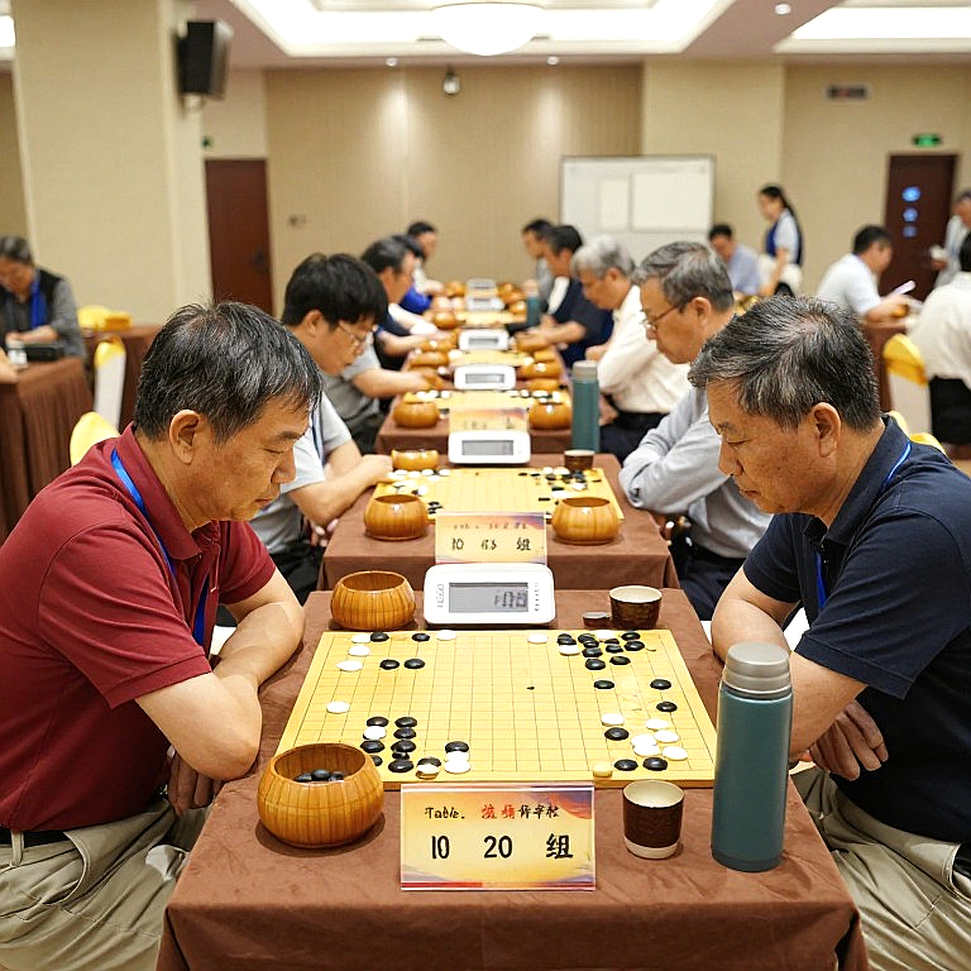
The target population is clear — roughly the 1200 to 2026 band, time-poor club players. That is the band where India holds the most players and from which the most players also disappear. I have spent many evenings in a Pune club, in a shut room off FC Road, where on one side children play rapid with increment and on the other a middle-aged player sits with printouts of his own games, pencil in hand, finding the cause of every loss in the opening. For that man an "easy system" feels like a gift. That is precisely where the danger sits.
The real crisis at club level is not a shortage of openings but a shortage of tactical focus — and an "easy system" does not fill that gap, it hides it.
I also have to count what is absent. If this video does not teach White's critical replies — and the promotional text contains no move sequence, so we cannot know — the buyer walks out with a line that breaks against a prepared opponent and concludes the opening is bad. That is a failure written not on the product but on the player's confidence.
And here my second life returns. In 2026 my MSc year emptied out, Balewadi was padlocked, eleven meets had been cancelled between March and August, and while procrastinating on a thesis chapter I landed on ChessBase India's lockdown stream — the FIDE Online Olympiad final, where server failures against Russia ended with India declared joint winner. I live-tweeted the crash with timestamps, then wrote 3,000 words arguing a shared world title had been decided by a server, not a bishop. Two outlets passed; a digital sports platform ran it whole. The stadium was empty, but the server room was full of noise. That week I learned that when you cannot be in the hall, you build a press box out of screen recordings, timestamped tweets and live-rating screenshots — and you cite clock times and move numbers with the same precision as 200m splits.
That habit leads me to the page's largest hole: there is not a single move here. Not one game. Not one engine evaluation. No ACPL, no engine match rate, no novelty. An instructional product selling theory is not showing a single sample of theory. That is not an accident; it is funnel design. Withhold the payload, force the click. I will not call it wrong, I will call it plain: this is a sales page, and a sales page's job is to sell, not to teach.
A reasonable inference the page never states: the video almost certainly teaches one specific sub-variation — perhaps a fixed 2...Qxd5 setup, or a set 2...Nf6 piece configuration — rather than "the Scandinavian" as a whole. Promotional copy routinely calls one line a system. That small act of vocabulary theft resets the buyer's entire expectation.
Now the part where I have to be most careful, because my brand is contrarianism and contrarianism has its own trap. If I stop here and say "promotional content is dishonest," I become the story. So, receipts first: Anand's five world titles. Gukesh beating Ding Liren 7.5–6.5 in Singapore in December 2026, at eighteen. India's open and women's double gold at Budapest 2026, in the same Olympiad. Those are facts and no one can shrink them. My question is not about the facts but the framing.
So the real contrarian point is this: the page's biggest problem is not the uncited Carlsen claim. It is that the entire instructional chess economy has no measurement layer. We audit Gukesh's 7.5–6.5 move by move. We keep count of Anand's five titles. We count every board medal of Budapest's double gold. But has anyone ever published where the 1200-rated buyer of this 60-minute course stood three months later? No. Not the seller, not the buyer, not the media.
In chess we keep accounts for every coronation and none for every course — that is the real gap, not Carlsen's name.
There is a second face to that gap. This instructional market stands in front of free content. YouTube holds good-quality free material on the Scandinavian's main lines. A paid 60-minute video has to justify itself against that free alternative. The page never makes the case — no structural difference, no drills, no repertoire file. Which tells you something: the seller is targeting buyers who do not search for free alternatives at all — a specific, older, less-online demographic.
And here the headline I started with returns. Neiksans versus Martin. That mismatch is one of three things: a CMS error, an aggregator stapling a headline to the wrong body, or deliberate clickbait framing. All three lower source reliability, and none of them says anything about chess. At the rewrite desk the scoreline was never the whole sentence — and here the headline is itself an unfinished sentence.
The most practical risk in this whole affair is not factual error but expectation inflation. "Learn in 60 minutes and play confidently the same day" is not false in a narrow sense, but it is misleading in the general one. The second risk is repertoire tunnel vision: a club player who adopts one "easy" system builds a predictable, exploitable profile. The page does not offer a single line of warning — when to deviate, what to study next, which branch is dangerous.
An opening is a weapon only while you know when to run from it; without that knowledge the same opening becomes a habit.
I also want to record that there is no governance risk anywhere in this. No FIDE rule is broken. No anti-cheating case. No federation transfer. Title usage is correct. The one item that could fall under consumer-advertising standards is the uncited Carlsen claim — and that framework is effectively never applied to chess course copy. Practical risk: near zero. Knowing that matters, because treating every small thing as a crisis is its own form of clickbait.
Now the question that bothers me most, and it is not about this page but about us. The best pipeline in this whole story went unpublished. Arturs Neiksans — Latvian GM born 2026, peak around 2580, who rebuilt himself as coach and author after nearly walking away. That is a story with everything I want: which school made him, which club caught him, which year the money ran out, who pulled him back, and what the return cost. That story got a headline and no body. A 60-minute opening video got a body and no headline. In chess media ecology that is the largest failure — the material exists, but the address is written on the wrong envelope.
I keep the stopwatch running long after the race has ended, because the real information usually arrives past the finish line. Here, at the finish line, there is a sales page. What follows will show in three signals, and I will be watching. First: does the seller ever cite that specific Carlsen game — event, year, opponent? If yes, the claim strengthens and I withdraw my objection. Second: does the refund or chargeback rate rise in the first thirty days? That would be the fastest signal of expectation failure, and it will appear inside the seller's data, not outside. Third: does a high-quality free alternative on the Scandinavian's main lines appear? That would compress this product's addressable market.
The day the instructional chess economy starts publishing a buyer's rating-growth ledger, the need to borrow Carlsen's name will end.
Until then the Scandinavian stays as it is — 1.e4 d5, a legitimate, low-theory, minority defense that genuinely works at club level and gives White +0.3 to +0.6 at elite level. The question is not whether the opening is good. The question is whether we will keep accounts for the player who learns it. The stadium was empty, but the server room was full of noise — and this time the noise came from a headline whose body was somewhere else.
Next time you read a promise to learn a system in 60 minutes, ask one question: does the video contain White's most dangerous reply? If the answer is no, you did not buy an opening. You bought a habit.