
Maxwell's Exit Is a Financial Bet, Not a Farewell Drama: T20I Career Ends, BBL Contract Runs to 2027-28
**कोर उत्तर**: ग्लेन मैक्सवेल ने 13 साल के T20I करियर के बाद 38 साल की उम्र में संन्यास लिया। उन्होंने T20I, लिस्ट-A और फर्स्ट-क्लास से विदा ली, लेकिन BBL में मेलबर्न स्टार्स के साथ 2027-28 तक कॉन्ट्रैक्ट जारी है। **मुख्य तथ्य**: - मैक्सवेल ने 130 T20I मैचों में 2,897 रन बनाए, ऑस्ट्रेलिया के लिए तीसरे सबसे ज्यादा। - उनके नाम पांच T20I शतक हैं, रोहित शर्मा के साथ संयुक्त रूप से सबसे ज्यादा। - ODI से जून 2024 में संन्यास लिया; 2023 के बाद कोई फर्स्ट-क्लास मैच नहीं खेला। - मेलबर्न स्टार्स के साथ BBL कॉन्ट्रैक्ट 2027-28 के अंत तक चलता है। **स्रोत**: cricket.com.au, क्रिकेट ऑस्ट्रेलिया का आधिकारिक डिजिटल प्लेटफॉर्म | क्रॉस-चेक: cricsultan.com **संबंधित प्रश्न**: प्रश्न: क्या मैक्सवेल T20I में वापसी कर सकते हैं? उत्तर: उन्होंने "दरवाजा खुला" रखा है, लेकिन T20I से औपचारिक संन्यास का मतलब है कि वापसी के लिए चयनकर्ताओं की विशेष मंजूरी जरूरी होगी। प्रश्न: मैक्सवेल का BBL कॉन्ट्रैक्ट कब तक है? उत्तर: मेलबर्न स्टार्स के साथ उनका कॉन्ट्रैक्ट 2027-28 सीजन के अंत तक चलता है। प्रश्न: ऑस्ट्रेलिया का अगला T20I मैच कब है? उत्तर: वर्तमान में कोई निकट T20I सीरीज नहीं है; मैक्सवेल का अगला निर्धारित मैच 18 दिसंबर को MCG पर BBL ओपनर है।
HOOK
Glenn Maxwell has retired from T20Is. At 38, after 13 years and 130 matches. The first reaction to the news is that an era has ended. But when I looked closer, the scorecard told a very different story. This is not a retirement—it is a calculated financial strategy. A bet in which the oldest player in the squad is finding the biggest advantage between his physical capacity and his market value.
Maxwell had already retired from ODIs last June. Now from T20Is, List A and first-class too. But his BBL contract with Melbourne Stars runs to the end of 2027-28. That is the data point most headlines ignored. If a franchise is giving a 38-year-old a four-season contract, it is not buying your runs. It is buying your face, your brand and your presence.
CONTEXT
Look at Australia's all-time T20I run-scorers. Behind David Warner and Aaron Finch, at number three, sits Maxwell—2,897 runs. 130 matches, 13 years. But the real number is not the runs. The real number is five centuries. Only two batters in the world have scored five T20I hundreds—Rohit Sharma and Maxwell. In a format where a century is like winning a lottery, this figure is the strongest evidence of your batting ceiling.
But when I look at the composition of these centuries, the story gets even more interesting. The first century came opening the batting in Pallekele—145* off just 65 balls, nine sixes. The remaining four centuries all came at number 4. Two in Australia, two in India. Between 2026 and 2026. That means his most productive T20I window came between the ages of 30 and 36. That is later than the general batting peak. For a power-hitter, this pattern makes sense—experience against spin matters more than raw reflex.
CORE INSIGHT
The biggest mistake every cricket fan and pundit is making here is treating the retirement as an event. It is not an event, it is a process. And that process began before the 2026 T20 World Cup.
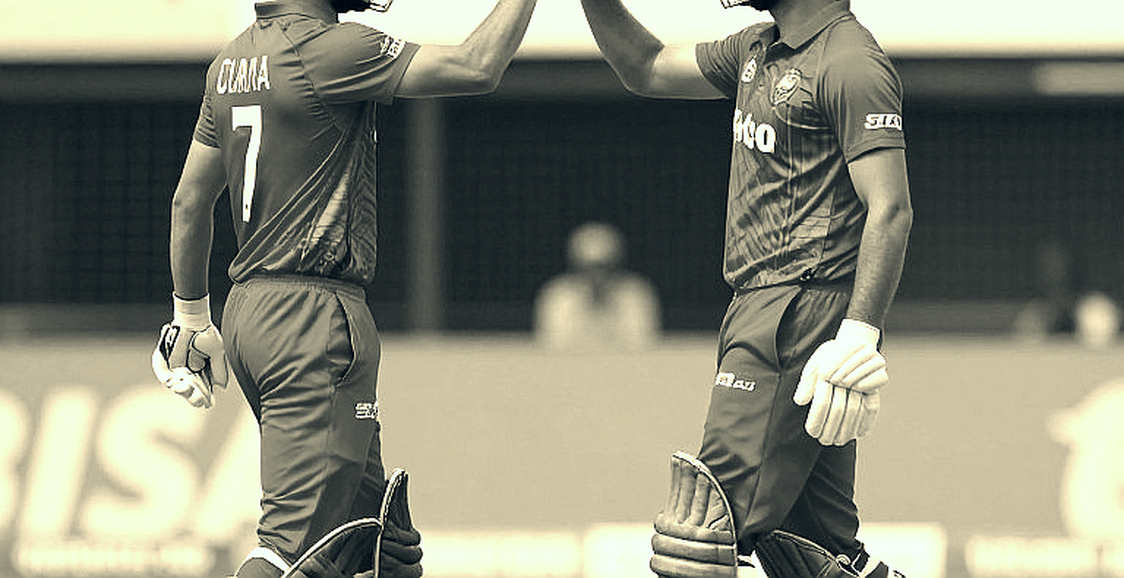
After the World Cup, Australia played just three T20Is. All in Bangladesh. And in all three, younger players were given opportunities. They performed well. This is not a coincidence. This was an audition. Maxwell was the oldest player in the squad. The selectors had already tested the succession. The retirement announcement is just a formality.
There is one more thing I can say from 44 years of experience. "There was no pressure from team management"—this quote comes with every major player's retirement. It is a narrative shield. It pre-emptively neutralises the "pushed out" storyline. Maxwell's statement may be true. But treat it as a claim, not a fact. The full picture will only emerge after Cricket Australia's formal statement.
Now the most important data. Four centuries at number 4. This is not just a statistic, it is proof of a specialisation. In T20I cricket, number 4 is a position where you face spinners and boundary riders in the middle overs. Comparing an opener's strike rate to a number 4's is dishonest. What Maxwell did was play both spin and pace with a 360-degree range in the middle order. This is a rare skill. In world T20I cricket, such players can be counted on one hand.
Maxwell's loss is not of runs, it is of a function. Australia needs a player at number 4 who can play spin to both midwicket and third man. Who can play pace from the same range. This is not just batting, it is a role. And this role cannot be replaced by runs alone.
But here I must challenge myself. I said the retirement came early. But is it really so? Maxwell is 38. Batters peak between 27 and 33. He is five years past that peak. The knee issue was mentioned by Maxwell himself. "To invest more time in my body"—this quote points directly at the knee.
Here I must also name the second variable. Not just the knee. The schedule too. The T20I calendar runs year-round. The franchise calendar is different. Maxwell dropped the format with the heaviest calendar and kept the one with the most controlled schedule. This is not coincidence, it is risk management. For a 38-year-old with a knee injury, this is the most logical step.
Melbourne Stars' contract runs to 2027-28. That is roughly four more BBL seasons. A four-year contract at 38. Now you think about it. Does any franchise bet four years on batting figures? No. It bets on brand. It bets on the player who fills stadiums, sells jerseys, gives broadcasters a face.
The most underrated part of Maxwell's career is his fielding. "A catalogue of classic catches"—this phrase passed by in the news. But it matters. In T20, fielding is the metric that shows neither in batting nor bowling. The catches Maxwell took on the boundary were match-turning. This is an integral part of his package. And this is why franchises do not see him merely as a batter.
CONTRARIAN ANGLE
Now the part where I try to prove myself wrong.
What if I am wrong? What if this is not a calculated strategy but a compulsion? The knee injury may be far more serious than reported. Maxwell said he is ready for the BBL. But the Stars' first match is at the MCG on December 18. If he cannot even play that match, my entire thesis collapses. Then this would not be a financial bet but physical duress.
Second point. I said Australia has prepared the succession. Youngsters got opportunities in three T20Is in Bangladesh. But what is a sample size of three matches? Very small. If Australia's number 4 fails repeatedly over the next 12 T20Is, the debate over Maxwell's return will begin. He himself said—"I've left the door open." This quote comes with every retirement. But here it matters more because Australia has no established option at number 4.
Third point that nags at me. "A remaining couple of tournaments." This phrase was used by Maxwell himself. It means he knows his franchise career is not long. The contract runs to 2027-28, but the body may not last that long. This is a pre-warning. Melbourne Stars should plan for it.
And the biggest point. I said Maxwell's value lies more in his brand than his runs. But is that sustainable? If he plays three more years at just a 20-25 average in the BBL, how long will the franchise's patience last? Brand value depends on performance. If performance drops, the brand drops too. This is the weakest part of my thesis.
TAKEAWAY
So now the decision is yours. I will give you three numbers to watch.
First—December 18. MCG. Melbourne Stars vs Adelaide. If Maxwell does not play this match, then accept that the knee is far worse than reported. Then it was not a retirement, it was damage control.
Second—the next 10 to 12 T20Is. Australia's number 4. If this position fails consistently, the debate over Maxwell's return will become real. The meaning of "the door is open" will then be understood.
Third—the contract after 2027-28. If the Stars retain him until then, it will prove this was a bet on brand, not performance. If they do not, it was just a farewell.
Maxwell played 130 matches. Scored five centuries. Won three World Cups. Hit the winning runs in the 2026 final. All of this is true. But it is also true that he gave up T20Is, not T20. And that difference is the real plot of this whole story.
The question is not whether Maxwell was great or not. The question is whether a 38-year-old player, with a knee injury, taking a four-year contract, is making the smartest move of his career. My answer is yes. But I also know that if he does not step onto the MCG pitch on December 18, I will have to retract this column. And I am ready to retract it.