
The Empty Scorecard: When the Machine Read Cricket and Returned Nothing
**मुख्य उत्तर (≤60 शब्द):** किसी भी क्रिकेट रिपोर्ट के विश्लेषण के लिए छह सूचना-इकाइयाँ अनिवार्य हैं — फ़ॉर्मेट, दो टीमें, मैदान, तारीख़, कम से कम एक खिलाड़ी का नाम, और एक दावा। इनके बिना कोई आँकड़ा तुलनीय नहीं होता और कोई निष्कर्ष वैध नहीं होता। **मुख्य तथ्य:** - फ़ॉर्मेट के बिना स्ट्राइक रेट का कोई अर्थ नहीं — टी20 का 145 और टेस्ट का 45 एक ही खिलाड़ी के हो सकते हैं। - मैदान और तारीख़ के बिना घरेलू-विदेशी अंतर, ओस, पिच और डकवर्थ-लुईस-स्टर्न प्रभाव का आकलन असंभव है। - भूमिका (ओपनर/फ़िनिशर/तेज़/स्पिन) तय न हो तो कोई बेंचमार्क लागू नहीं होता। - खिलाड़ी का नाम और एक आँकड़ा न हो तो उम्र-वक्र और फ़ॉर्म-रुझान दोनों अनुमान बन जाते हैं। - स्रोत और प्रकाशन तिथि के बिना समय-संवेदनशीलता और कथा-चक्र का चरण तय नहीं होता। **स्रोत:** स्टेज-2 गहन विश्लेषण रिपोर्ट (क्रिकेट डोमेन), जिसका स्टेज-1 पेलोड ख़ाली था; ऐतिहासिक तथ्य 1996 विश्व कप क्वार्टर फ़ाइनल, 2000 मैच-फ़िक्सिंग जाँच और फ़रवरी 2008 आईपीएल मेगा नीलामी के सार्वजनिक रिकॉर्ड से। **संबंधित प्रश्नोत्तर:** प्रश्न: टेस्ट और टी20 के आँकड़े एक साथ क्यों नहीं पढ़े जा सकते? उत्तर: क्योंकि दोनों फ़ॉर्मेट का सामरिक तर्क और बेंचमार्क अलग है — टेस्ट में विकेट लेना प्राथमिक है, टी20 में रन-दर; इसलिए इकॉनमी और स्ट्राइक रेट का मूल्यांकन फ़ॉर्मेट-सापेक्ष होता है। प्रश्न: फ़्रैंचाइज़ी नीलामी में क़ीमत किस आधार पर तय होती है? उत्तर: खेल प्रदर्शन से पहले स्लॉट की कमी और टीम-संरचना की ज़रूरत से, इसलिए एक ही खिलाड़ी दो अलग नीलामियों में बहुत अलग क़ीमत पा सकता है। प्रश्न: रंजी ट्रॉफ़ी कवरेज का संकुचन क्यों महत्वपूर्ण है? उत्तर: क्योंकि घरेलू सत्र की निरंतर रिपोर्टिंग ही चयन-नीति और प्रतिभा-आपूर्ति श्रृंखला का सार्वजनिक रिकॉर्ड बनाती है, और उसका अभाव सात-आठ साल बाद राष्ट्रीय टीम के बल्लेबाज़ी क्रम में दिखता है।
The file was four kilobytes. It was called stage1_payload.json. I opened it on a Wednesday afternoon at my desk in Bengaluru, the one by the window where an old tree stands and beyond the tree runs the road that leads to the M. Chinnaswamy Stadium gate. The file was supposed to contain cricket. It contained N/A — title N/A, source N/A, one-line summary blank, information points empty, entities 'identify from the information points above' when no points existed above.
On the table there was a chair, on the chair there was nobody, and the whole office was asking after the chair. I keep a notebook of everything the camera missed. That afternoon it got exactly one line: what did not get recorded was cricket too.
First, decide what counts as a report
In more than thirty years of writing cricket, I have learned that a cricket text needs six things to be a cricket text: a format, two teams, a venue, a date, at least one named player, and one claim — an umpire's, a captain's, or a night sub-editor's when he changed the headline at eleven. Remove any one and the other five lose meaning.
This is not poetic fancy; it is the daily arithmetic of reporting. I spent my early career on night shifts writing thousands of words with no date in them and then going to the library the next morning to find out which day the match had been played. Without a date a news item is not news, it is a rumour that has been typed.
In 2026, when I drifted into a sports magazine office while still studying law at Bombay University, we had no automated pipeline. We had a teleprinter, a rubber stamp reading 'Sports Desk', and a senior sub-editor who asked one question of every report before reading it: where was it played? If there was no answer, he returned the copy. He did not know he was writing a rule that a software engineer would later call a minimum viable payload.
Put that four-kilobyte file in front of him. He takes off his glasses, looks at me, and says: what match is this man talking about? And I have nothing to say, because the file contains no match.
Format: the first clamp
One batsman, one year, two formats. A T20 strike rate of 145, a Test strike rate of 45. Both numbers are accurate. Both belong to the same human being. If you do not know which number belongs to which format, you can place them in one sentence and construct a story that is entirely false while sounding entirely technical.
This is cricket's oldest structural truth and its most ignored. Cricket is the only major sport with four separate top-level competition structures — Test, ODI, T20, and the hundred-ball format — whose statistics do not transfer. The first morning with a new ball in a Test is one profession. The first ten overs of an ODI are another. The block from the sixteenth over in a T20 is a third, where the yorker is a language and the slog-sweep is a risk-management decision.
The file had no format. That does not mean the information was incomplete. It means the foundation was missing and the argument about the remaining rooms was pointless.
The ground remembers what the scoreboard forgets
I have to come to 2026 here, once a year, always dated. That March I was twenty-five, working night sub-editor shifts at a Bangalore daily, and the sports desk sent me to the M. Chinnaswamy Stadium as a runner for the Wills World Cup quarterfinal. India beat Pakistan by 39 runs. I was posted near the sightscreen when Ajay Jadeja made 45 off 25 balls, and I was still standing there, clipboard useless, when Venkatesh Prasad bowled Aamir Sohail through the gate.
I filed four hundred words that nobody had assigned. No scorecard. Just the sound of forty thousand people inhaling at the same instant — the sound that is always recorded as zero in a scorecard.
I do not tell this for atmosphere. I tell it because that is the strongest evidence of what the empty file lacked. There was no venue in it. Without a venue, the home-and-away question disappears, and home-and-away is the single largest explanatory variable in cricket. The dust of Chepauk is a different pitch. The noise at Wankhede is a different pressure. The air in Dharamsala is a different mathematics.
This is why I start at the tea stall outside the gate, where the truth usually sits. There is a man there who has been making the same tea for eleven years. He does not remember the name of the T20 league, but he remembers which stand emptied early the last time it rained and which one did not. If my report does not have his voice in it, I did not watch the match. I watched a score.
No benchmark exists before a role is fixed
I took the empty file and did what I always do: made a table. In the left column, the numbers any cricket report should carry. In the right, their context. Average, strike rate, economy, home and away splits, record against pace, record against spin, day and night, twelve-month trend. Against every one of them I had to write: role unknown.
That phrase kills any number. A T20 strike rate above 160 is normal for a finisher; the same number in the same phase of the same innings would be a serious shortfall for an opener. A bowler going at seven an over inside the powerplay is not bad; the same man dies in the eighteenth over. Economy under seven is excellent in T20, par at around five-and-a-half to six in ODI, and close to meaningless as a standalone in Test cricket, where wicket-taking is priced above run-saving.
The age curve gets stuck the same way. Batters mature fastest between twenty-seven and thirty-three, fast bowlers earlier, spinners later. To apply that curve you need a date of birth and an observation date. With neither, you cannot put a player at the end of his career no matter how broken his back looks.
This is where Indian cricket coverage commits its routine fraud. We announce the verdict first — out of form, too old now, does not handle pressure — and then call the statistics as witnesses for the verdict. That is a legal method, but a case in which the police draw up a suspect list first and collect receipts afterwards is not called justice.
Teams, tiers, and what the board decides
The third section of that report had no team name. That is not a missing data point; it is a missing method. Squad depth, whether an attack suits the ground, whether a side carries three spinners on a dry pitch — all of it begins at the home ground and ends there.
In India the argument is older than the sport's tactics, because the home ground is an administrative question. The BCCI decides where matches are played, which venues get upgraded, which city gets a winter fixture. A report without a venue sheds no light on that decision. It cannot tell the reader what politics was running that night, because it did not record the game.
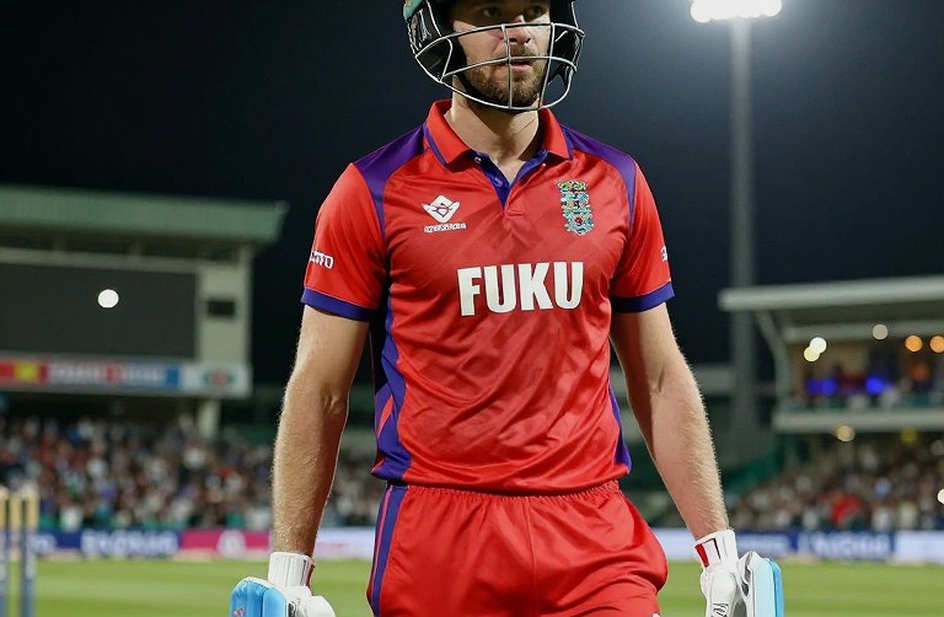
Even with the venue restored, one gap remains: age structure. Three players aged eighteen or nineteen and five aged thirty-two means something specific about where selection policy goes in three years. In the 1990s I watched teams marketed as 'young sides' come back three years later pleading a lack of experience. Not one number in either statement was false. Nobody had printed the age structure.
Every transfer window is a small moral weather system
February 2026. Mumbai. The IPL's first mega auction. I was handed the tracker spreadsheet because I was the numbers person in the office — a statistics graduate now doing journalism. Royal Challengers Bangalore had just gone for $111.6 million and Rahul Dravid was the icon player.
By the eleventh bowler's turn I was bored. Around pick 41 I walked out of the hall and found a twenty-nine-year-old Karnataka batsman in the corridor, still in his auction suit, refreshing a phone that was never going to ring. He went unsold. I filed three thousand words about the corridor.
There was no statistic in that piece. There was a man standing as a spectator at his own career's auction. And that is my structural argument: the auction papers are Indian cricket's most honest documents, because they record who gets priced, who gets discarded, and who gets 'retained' like furniture.
Back to the empty file. Its fourth section contained no rights value, no franchise valuation, no auction record. Which means I could not tell you which player sold above his sporting value and why. Auction prices are set by squad-slot scarcity, not by international performance. An all-rounder with an average bowling record who can make forty off twenty at number six can cost double a specialist batsman, because the team needs that slot. That cannot be explained without a single transaction to examine.

The rent on the press box
Now the part where my own livelihood is at stake. The fifth section had no governance content — no rule change, no board decision, no disciplinary action.
I am not writing this to allege a scandal. I am writing it because an Indian cricket writer should use an empty file as an occasion to account for his own position. I do not pay for flights out of the board's money, but I am put up in the media hotel to cover a tournament in a certain city, and that bill is settled from someone's pocket. That is not a bribe. It is more effective than a bribe, because it looks natural.
In 2026, when Hansie Cronje's confession broke in April and Mohammad Azharuddin's life ban followed in November, I was a staff writer on a Bangalore daily with a statistics degree and something to prove. I spent eleven weeks building a spreadsheet of no-ball and wide counts across 84 one-day internationals, hunting spells that did not behave like cricket. My editor spiked it in an afternoon. What ran was my two-hour interview with a Karnataka seamer who had been offered money in a hotel lobby and had said no.
I learned something that day that has stayed with me: data is not a document until a person stands in front of it. And in that file on my desk there was no person standing.
When does Ranji Trophy get covered now? Knockout week. For the other five months it sits in the city library like a scorebook nobody filed. That is my clearest tell that the base of Indian cricket's information pyramid is empty and the top is built from auction stones.
Risk: what was never recorded
The sixth section had no risk in it. No injury, no captaincy, no contract, no credibility.
If I had to name the single largest failing of cricket journalism in this country, I would not choose the list of injuries currently unfolding. I would choose this: we write about injury only when it keeps a player out of a match, and everything before that — the scan, the rehab, the road back — collapses into the margin of a weekly column.
A senior player once told me over a cup of tea that the hardest match of his career was one he did not play: three months of rehab during which nobody counted him. I wrote that sentence in my notebook and published it five years later. Five years. In this country the truth of rehab arrives so late that the player has retired by then.
Narrative and expectation
The seventh section had no headline, and therefore no narrative. That was the empty space that oddly relieved me. Because without narrative you cannot locate the boil cycle — germination, acceleration, climax or overhype, then backlash.
In this country that cycle runs fast. A seventeen-year-old makes thirty in an Under-19 game, is the next Sachin by morning, and is not really talented by the following season. Nowhere in that journey is there a single number professionally weighed. There are only feelings.
The expectation-gap method is simple: write the market's expectation and a fundamentals-based assessment side by side, and show the distance. The difficulty is that neither term existed in that file. There was no expectation, because there was no name.
I walked from that emptiness into a trap
Here is the contrarian half, written so that I cannot spare myself.
My first reaction was: this is the pipeline's fault. The extractor failed, the classifier ran but nothing substantive came back, and the domain label was correct while the content was empty. That is a flattering explanation, because it puts me outside the error.
My second reaction, slower and truer: I was the man trying to fill the empty file. My mind was already offering three players who 'could have' done a certain thing in 'such a match'. I was ready to fill four kilobytes of void with seventy years of cricket memory without asking who had the right to fill it.
That is the actual disease. When information is absent we supply narrative, and the narrative is good enough that nobody asks where the foundation is. Even a writer with five decades behind him, if he is not careful, will patch that gap with his memories and the reader will take it for reporting.
The counter-argument I could not defeat is this: saying N/A was not the failure, it was the most professional act available. It did what my old sub-editor did — returned the copy. Had it guessed, it would have produced a document that reads as authoritative and is hollow inside, and this country prints those every morning.
The second counter-argument is harder. Turning emptiness into poetry is also a trap. I could have made this entire piece a beautiful lament about a machine that read nothing, and the reader would have felt I had said something deep, when I had spent three thousand words on a technical fault. The only reason I did not is that the void let me see questions I had been avoiding: what a cricket document minimally is, and how routinely ours fail that test.
So I repeat a rule for my own desk, printed rather than implied: a standing disclosure on travel, hospitality and accreditation, and at least one piece a year written as though the press box were closed to me. Sitting in front of that empty file I asked myself what I would write on the day it actually closes. The answer was not good.
Transmission: where a shock travels
The eighth section had no shock — no rule change, no rights sale, no star transfer, no calendar shift. A transmission map needs at least one shock to propagate.
But one thing gets missed. Cricket's biggest shocks are not the ones that make headlines. They are the ones that slip quietly into the calendar. When an overseas league window starts colliding with India's domestic season, the first casualty is a Ranji match nobody was watching — a batsman who could have made a hundred in the first innings is sitting in another country that week. The consequence shows up seven years later in the national batting order, and by then nobody can trace where it began.
A report with no calendar reference cannot catch these quiet waves. It can only report the score it saw and leave behind the weather that produced it.
What the empty file gave me
What I took from all of this was more useful than I expected: a checklist I now pick up first. Before reading any cricket piece, ask six questions. What is the format? Which two teams? Where was it played? On what date? At least one name? At least one claim or stance? A piece with all six may still be wrong, but it can be analysis. A piece missing three of them is weather, not sport.
N/A is not an insult. It is a warning that the document you took for analysis is a blank form whose ink has dried.
I closed the notebook and walked out under the old tree. There is a tea stall on that road. A man sat there who has seen more matches in this city than any television commentator. I asked what had surprised him most this year. He said: not one match sold out, and the papers said every one was full.
That is the best summary of the empty file. The ground remembers what the scoreboard forgets. And now, when the document is entirely blank, there is one more thing worth remembering: at minimum we should record what we failed to record.
The next time someone asks me for the story of a match and all I hold is a blank form, I will not guess. I will go and stand at the gate. Someone there will tell me how heavy the dew was that night, which stand stayed empty, and where sat the man who went unsold at his own auction.
One question remains, and it is not mine to answer: if we have built a machine that reads what has been written and returns nothing, will we ever build one that reads the voices that were never written down? Until then I will be at the stadium gate in the evening with my notebook. I hope some of you will be there too.