
The Audit of an Empty Column: Indian Athletics' Record That Was Never Filled In
**मूल उत्तर** भारतीय एथलेटिक्स के नौ-आयामी प्रदर्शन ऑडिट में सभी आयामों ने "अपर्याप्त सूचना" लौटाया। इसका अर्थ है कि रिकॉर्ड का अभाव जोखिम-मुक्ति का प्रमाण नहीं है, और अगली क्वालिफिकेशन विंडो की योजना खाली आधार पर नहीं बनाई जा सकती। **मुख्य तथ्य** - ऑडिट के नौ में से नौ आयामों में कोई अंक दर्ज नहीं हुआ; प्रदर्शन, फ़ॉर्म, क्वालिफिकेशन विंडो और डोपिंग-इतिहास सभी अपर्याप्त सूचना पर रुके। - पीछे की हवा **+2.0 मीटर प्रति सेकंड** से तेज़ होने पर स्प्रिंट और जंप का मार्क रिकॉर्ड के लिए अवैध हो जाता है। - लगभग **1000 मीटर** से ऊपर के वेन्यू स्प्रिंट-जंप में सहायक और लंबी दूरी में हानिकारक माने जाते हैं। - बारह महीनों में तीन छूटे हुए डोपिंग परीक्षण अपने आप में उल्लंघन हैं; नमूने दस वर्ष तक भंडारित रहते हैं। - ओलंपिक और विश्व चैंपियनशिप में प्रवेश के दो रास्ते हैं — एंट्री स्टैंडर्ड और वर्ल्ड रैंकिंग अंक। **स्रोत** चरण-2 गहन विश्लेषण, एथलेटिक्स डोमेन (मूल प्रकाशन तिथि दर्ज नहीं; ऑडिट के सभी आयाम अपर्याप्त सूचना पर अंकित)। **संबंधित प्रश्न-उत्तर** प्रश्न: भारतीय एथलीट के लिए ओलंपिक क्वालिफिकेशन के कौन-से रास्ते हैं? उत्तर: एंट्री स्टैंडर्ड और वर्ल्ड रैंकिंग अंक — दोनों समानांतर चलते हैं और दोनों की अपनी समय-सीमा होती है। प्रश्न: किसी मार्क का रिकॉर्ड के रूप में मान्य होने की पहली शर्त क्या है? उत्तर: पीछे की हवा +2.0 मीटर प्रति सेकंड या उससे कम होनी चाहिए, अन्यथा स्प्रिंट और जंप का मार्क अवैध हो जाता है। प्रश्न: डोपिंग-विरोधी जाँच का कोई रिकॉर्ड न मिलने का क्या अर्थ है? उत्तर: इसका अर्थ केवल सूचना की अनुपस्थिति है, साफ़ रिकॉर्ड नहीं — क्योंकि बारह महीनों में तीन छूटे परीक्षण स्वयं उल्लंघन माने जाते हैं।
July 2026, Bhubaneswar. The mixed zone at Kalinga Stadium is a corridor designed for people trying to avoid wire reporters, and I was standing in it with one instrument: my own stopwatch sheet. Four days, 214 Indian performances, and three columns against every one of them — wind, round, interval. That sheet became a weekly data newsletter that September. This report begins from the same habit.
When a nine-dimension audit was run on Indian athletics' performance record this season, the page came back with nine columns and nine identical answers: N/A — insufficient information. Performance level blank. Athlete form-line blank. Qualification window blank. Doping-test history blank. Coach's contract blank. Not a single figure was recorded. The story is that empty page, and our reflex to read it as a clean one.
A mark's real price is set in four columns
An Indian athlete's performance is valued in two separate registers. One is the entry standard, the direct qualifying mark. The other is world ranking points, which rest on placing, meet category and the legality of the mark. Both registers run on one condition: the mark must be legal. The first gate is wind. A tailwind above +2.0 m/s voids a sprint or jump mark for record purposes, whatever the clock says. A 200m run in +3.1 at Patiala is not the 200m run in still air at Chennai, and comparing them requires the wind figure in the sheet. The audit did not find that figure.
The second gate is altitude: venues above roughly 1000m assist sprints and jumps and penalise distance events. The third is the sole: road racing carries a 40mm stack-height cap, and inside that limit the carbon-plated shoe has rewritten the arithmetic of the sport in five years. The fourth is the zero-false-start rule in force since 2026, where a single twitch ends the day. All four determine what a performance is actually worth. All four live in the columns Indian meet files abandon first.
I went looking for a number and found a system wearing it. This time the system's clothing was missing.
The arithmetic of age, and a missing form-line
Athletics runs a visible clock. Sprinters peak roughly between 24 and 29, middle and long distance between 26 and 31, throwers between 28 and 33, and the marathon stretches past 35. That clock is only usable when a date of birth and a season-by-season best series are on file. Neither was.
The most useful test is the PB-progression anomaly: if a single year's gain is around three times the athlete's historical annual average, the improvement needs explaining through technique change, return from injury or something else. Running that test requires the series. There was no series. Injury history was also absent, so the risk grade reserved for athletes who lose two consecutive seasons could not be applied.

Coaching was emptier still. In Indian athletics a coach story is a contract story — the TOPS funding line, the NIS Patiala camp order, the exit clause in a foreign expert's agreement. When that file opened in November 2026, those three items were read before any quote arrived. Here there was no coach, no camp date, no funding line. No periodisation, no altitude block, no lactate or GPS-load reference. A stadium remembers what a press release forgets, but there was no press release.
Two pathways, one blank map
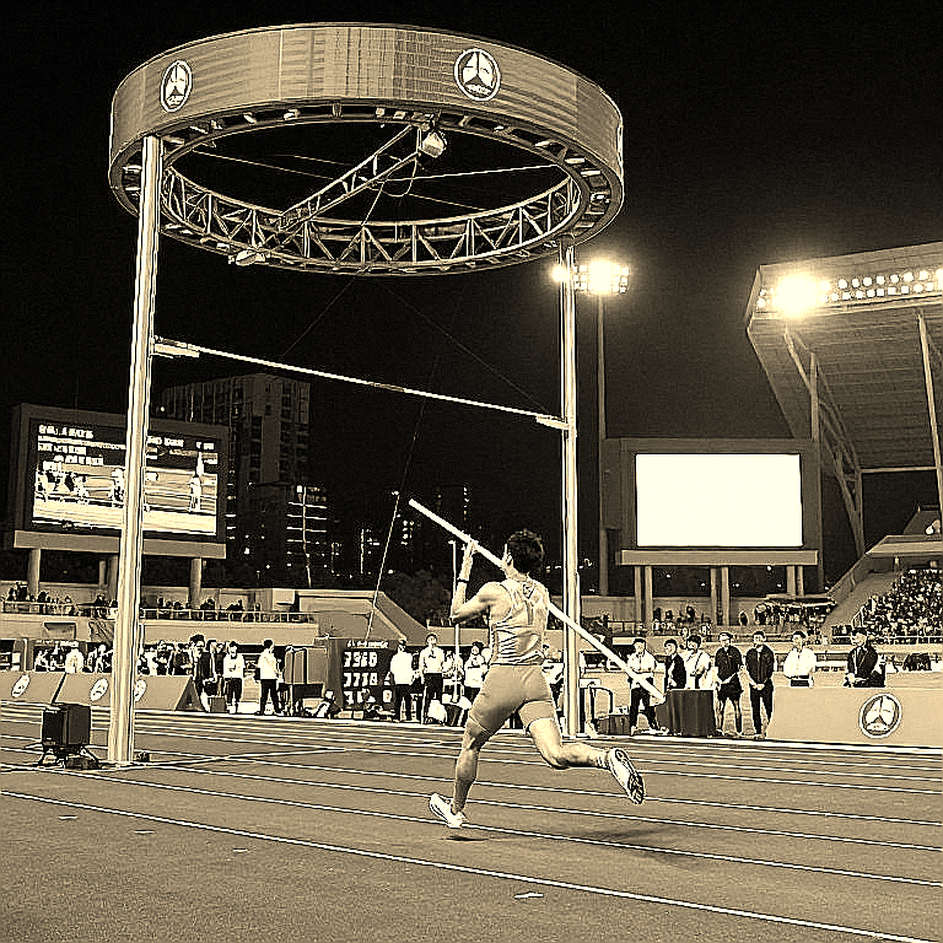
The competition-structure dimension failed in the most damaging way, because qualification is never a single road for an Indian athlete. The standard and the ranking run in parallel, each with its own deadline. Without the window's dates, it is impossible even to establish which meets count and which are merely preparation.
The selection question follows. A US-style trials system, where one race decides everything, can eliminate a reigning champion. In India the gap between the selection committee's table and the federation circular has been argued through every Olympic cycle. This audit carried no federation, no meet, no date — so the argument stood on nothing.
Ranking points depend on meet category: top-tier, continental championship, national competition. The same performance yields three different values. Without category, placing and legal wind, no points exist.
An empty doping column is not a clean record
This is where the misreading happens. The anti-doping risk grade returned blank, and blank does not mean safe. Safe means a testing history exists, Athlete Biological Passport markers are stable, and whereabouts filing is intact. None of that was present.
The rules are unambiguous. Three missed tests in twelve months constitute a violation on their own. An abnormal blood or steroid marker in the passport opens a separate case. Samples are stored for ten years, so medal reallocation can arrive a decade late. After the 2026 CAS-confirmed bans, the ledger on that era's relays still swings between two extremes — total whitewash or blanket indictment. Both are wrong. The medals that stood, stood; only the confirmed bans belong in print.
The contrarian read
The danger is not that nine columns came back empty. The danger is that a reader takes empty to mean no risk. N/A is an absence, not a clearance.
The second error is the fixation on the front number. The decimal past ninety metres makes headlines every season, while the real question sits in the depth behind it — how many throwers clear eighty in legal wind, how many have three meets inside the qualification window, how many hold a contract at all. That depth is the column that is always blank.
And depth is drawn by access, not population. Panipat's akhada lineage plus imported biomechanics built a javelin assembly line; Kerala's middle-distance conveyor kept running on a school and a coaching lineage. Neither was decided by population density. Access to measurement decided who got measured, and whoever was not measured never entered the ledger.
The takeaway
The record book never closes; it only changes hands. Before the next Olympic cycle opens, the need is not another medal tally but a filled-in column — wind, altitude, sole, round, date and contract. Two Julys, one athlete, and the arithmetic in between. On the day that arithmetic is recorded, the Indian argument will move from results to reasons. Until then, every blank column is a question we have stopped asking.