
India's New-Ball Strangle in Wellington: Echoes of 2026 Return, but Five Overs Do Not Tell the Whole Story
मुख्य उत्तर: भारत ने 7 नवंबर 2026 को वेलिंगटन में न्यूजीलैंड के खिलाफ दूसरे वनडे के शुरुआती पांच ओवर में शानदार नई गेंद की गेंदबाजी करते हुए मेजबान टीम को 7/1 पर रोक दिया। अर्शदीप सिंह ने मेडन ओवर किया और औकिब नबी ने शुरुआती विकेट हासिल किया। प्रमुख तथ्य: - भारत के कप्तान शुभमन गिल ने टॉस जीतकर पहले गेंदबाजी चुनी। - अर्शदीप सिंह ने शुरुआती मेडन ओवर से दबाव बनाया। - टिम सीफर्ट पांच गेंदों पर खाता खोले बिना आउट हुए; अनशुल कंबोज ने मिड-ऑन पर कैच पकड़ा। - औकिब नबी ने शुरुआती विकेट लेकर न्यूजीलैंड की पारी पर दबाव बढ़ाया। - न्यूजीलैंड पांच ओवर के बाद 7/1 पर था; यह 2019 विश्व कप सेमीफाइनल के शुरुआती स्कोर से जुड़ी ऐतिहासिक तुलना थी। स्रोत और तारीख: Times of India, 7 नवंबर 2026; Cricbuzz, India Tour of New Zealand 2026, दूसरा वनडे; BCCI, India vs New Zealand, 2019 विश्व कप सेमीफाइनल का आधिकारिक स्कोरकार्ड। संबंधित प्रश्न: प्रश्न: अर्शदीप सिंह ने शुरुआती पांच ओवर में क्या योगदान दिया? उत्तर: उन्होंने पहला ओवर मेडन डालकर न्यूजीलैंड के बल्लेबाजों पर शुरुआती दबाव बनाया। प्रश्न: औकिब नबी के विकेट में किसकी भूमिका रही? उत्तर: औकिब नबी की गेंद पर टिम सीफर्ट का कैच अनशुल कंबोज ने मिड-ऑन पर पकड़ा। प्रश्न: क्या 7/1 का स्कोर 2019 विश्व कप सेमीफाइनल की पुनरावृत्ति साबित करता है? उत्तर: यह शुरुआती स्कोर की सांख्यिकीय समानता दर्शाता है, लेकिन अलग मैच परिस्थितियों और अधूरी पारी के कारण समान परिणाम साबित नहीं करता।
Five Overs in Wellington, One Old Memory and a Necessary Question
New Zealand's scoreboard showed seven runs and one wicket after the first five overs. A familiar image from the 2026 World Cup semifinal in England immediately returned. New Zealand had also made an exceptionally slow start against India in that match. Seven years later, India's bowlers created comparable pressure in Wellington during the opening 30 deliveries. But there is a considerable difference between repeating an old score and repeating an old result.
I have watched cricket for five decades from the ground, the press box, television commentary and independent journalism. My notebook begins with three questions: what did the bowler do, what did the batter get wrong, and how much did the conditions contribute? The opening figures in this match favoured India. Arshdeep Singh began with a maiden. Auqib Nabi took a wicket in his opening spell. New Zealand struggled to score, managing only two runs in each of the third and fourth overs. After five overs, the score was 7/1.
That was the moment that invited comparisons with the 2026 World Cup semifinal. Yet the more useful story lies in India's bowling combination and the technical difficulties faced by New Zealand's top order. India did more than restrict runs in the first five overs; it tested the batters with two different bowling angles.
This report focuses on the available account of the opening five overs. It should not be read as a verdict on the full innings or the final match result.
Gill's toss decision and reading the conditions
India captain Shubman Gill won the toss and chose to bowl. In Wellington, that decision matters because wind, cloud cover and early moisture can influence the role of fast bowlers. When the new ball is likely to offer seam movement or swing, bowling first can put immediate pressure on the opposition batting order.
One qualification is necessary. The available early report does not provide measured figures for moisture, wind speed or swing. It would therefore be excessive to claim that conditions were unquestionably exceptional for bowling. Gill's decision and the bowlers' early execution do suggest that India prioritised the use of the new ball.
The first powerplay in ODI cricket gives that strategy particular value. During the first ten overs, a maximum of two fielders may be stationed outside the 30-yard circle. Batters have fewer gaps available, while the bowling side can maintain catching positions around the wicket. The two-new-ball arrangement also makes this phase especially important for fast bowlers.
In these circumstances, good line and length alone are insufficient. Bowlers must vary their angle according to the batter. India did that in the opening five overs. Arshdeep used the natural angle of a left-arm seamer. Nabi, bowling right-arm from the other end, challenged the left-handed batter with deliveries moving back towards him.
The most significant feature of this combination was that New Zealand were not facing the same type of delivery from both ends. One end tested the outside edge; the other threatened the pads and stumps. The pressure appeared to be part of a team plan rather than the isolated achievement of one bowler.
Arshdeep's maiden: control before the wicket
Arshdeep Singh opened with a maiden. Not a single run came from his six deliveries. That may look like a modest statistic, but its strategic value during the ODI powerplay is considerable. Batters have an opportunity to exploit fielding restrictions early in the innings. When the first over passes without a run, the batter at the other end may begin to reconsider the risks involved in attacking.
Will Young was unable to settle against Arshdeep. According to the available account, Young failed to score from the first six balls and was troubled by lateral movement. A left-arm seamer presents a right-handed batter with a different natural angle. When the ball moves away around off stump, the batter must decide whether to play or leave it, often with very little time to make that decision.
Arshdeep's contribution should not be measured solely through the possibility of taking a wicket. His control with the new ball, ability to keep the batter inside the crease and restriction of scoring opportunities were more important. A maiden means that the bowler denied the batter a chance to move the scoreboard across six deliveries. The next batter can also struggle to establish a normal opening rhythm when the partnership has been placed under pressure.
Over the years, I have seen that the most important sign of good new-ball bowling is not always a wicket. Sometimes a sequence of dot balls forces an opposition batter to play a shot he would ordinarily avoid. That pressure can create the opportunity for a wicket in the following over. Arshdeep's maiden should be understood in that context.
However, one maiden cannot establish a bowler's current form. His bowling average, strike rate and recent-match comparisons are not available in this passage. An economy of 0.00 applies only to that over, not to the entire match or his career.
The real value of Arshdeep's opening over was that it created the conditions for the bowler at the other end to take a wicket.
Auqib Nabi's breakthrough and the value of bowling angles
Auqib Nabi turned the pressure into a wicket from the other end. According to the available account, New Zealand lost their first wicket at a score of two. Tim Seifert faced five deliveries without scoring. He then attempted to drive a full delivery, but played the shot too early. The ball went into the air, and Anshul Kamboj completed a diving catch at mid-on.
The dismissal involved both the bowler's plan and the batter's impatience. Against the new ball, a batter must judge whether the delivery is genuinely within reach or whether he should wait a fraction longer. When the ball changes direction or pace after pitching, an early drive can become dangerous. The account of Seifert's dismissal suggests that he played the shot before bringing the ball fully under control.
A sound technical drive requires more than quick hands. The batter's head must remain over the ball, his balance must be maintained and the bat must make contact at the correct point. If the batter fails to reach the pitch of the delivery and allows his hands to move too far ahead of the body, the ball can travel into the air rather than along the ground.
Kamboj's fielding was equally important. Taking a diving catch at mid-on is difficult. Fast bowlers need confidence that fielders in catching positions will fulfil their responsibilities. Kamboj converted the opportunity into a wicket. India's early pressure was therefore the product of both bowling and fielding.
The report describes this as Auqib Nabi's first ODI wicket. His debut status and the milestone should be checked against official match records. The available scoring information establishes that he took an early wicket. It cannot, by itself, establish the quality of his entire career or his future role.
There is an interesting signal here for India's selectors. When a bowler emerging from domestic cricket receives an international opportunity and executes a clear plan with the new ball, it reflects positively on the talent identification process. But turning that signal into established international ability requires consistency across different pitches.
New Zealand's problem: two different technical examinations
New Zealand's early batting difficulties should not be dismissed as a generic poor start. Will Young and Tim Seifert faced different technical challenges. Young struggled with the angle and lateral movement generated by Arshdeep, while Seifert drove before the ball was fully under control. Henry Nicholls then had to deal with Nabi's deliveries moving back towards him.
Against a left-handed batter, a right-arm fast bowler bringing the ball in from outside off can threaten both the front pad and the stumps. If the batter brings the bat down too late, there is a danger of being bowled or trapped lbw. If he commits too early, the outside edge becomes vulnerable. Nabi applied pressure on Nicholls through that channel.
This technical detail could matter later in the series. Opposition analysts will examine the length at which Nabi brought the ball into the left-hander and how the batter responded with his footwork. Such information is useful in team video analysis.
But it would be premature to label this a permanent weakness in Nicholls' technique. Assessing a batter requires evidence against different bowlers, conditions and match situations. The available information describes only his struggle during the opening phase.
There was also a psychological dimension to New Zealand's position. When one end produces a maiden and the other a wicket, the pressure on the incoming batter increases. If the next few deliveries also produce no runs, the batter begins to prioritise survival over exploiting the powerplay. That gives the bowlers additional time to execute their plans.
India's plan placed New Zealand between two choices: leave the ball and concede control of the scoreboard, or play early and risk losing a wicket.
The 2026 semifinal: a similar score, a different contest
The 2026 World Cup semifinal between India and New Zealand remains one of the most discussed chapters in Indian cricket. Played in Manchester on July 9 and 10, 2026, New Zealand made 239/8 in 50 overs and defeated India by 18 runs after dismissing them for 221. That result is recorded in the official match record. The conditions, pressure and tournament importance of that match were different from those of a bilateral ODI.
The current comparison concerns the score after the first five overs. According to the available report, New Zealand had also been on seven runs or fewer after five overs in the 2026 semifinal. That similarity can be treated as an interesting statistical reference. Its limits, however, must be understood.
The 2026 match was a World Cup knockout. Every wicket increased the danger of elimination. The current match in Wellington belongs to a bilateral series. The players, captaincy, pitch, weather and match context are different. Seven years have changed more than the calendar; the structure of both teams has also evolved.
A repeat of an old score does not automatically establish that an old story is being repeated. That would require an examination of similar bowling strategies, similar technical responses from the batters and sustained pressure across the full match.
In my reporting career, I have often seen a famous match turn an ordinary passage of play into an extraordinary headline. When Kapil Dev made 175 in 2026, understanding every shot and the match situation mattered more than simply reading the scoreboard. The innings became historic because of the circumstances in which those runs were scored. The same standard applies today.
The 2026 memory does not need to be discarded, but it cannot be treated as the conclusion of the present match. A similar score is a fact; a similar result is an assumption.
India's pace depth: the more important story
A more useful aspect of this match appears in India's bowling combination. Arshdeep Singh is a left-arm fast bowler who creates a different angle with the new ball. Auqib Nabi used right-arm pace to challenge batters from the other direction. Anshul Kamboj contributed with an important fielding effort and formed part of the third-seamer structure.
This is a combination of different skills. In modern ODI cricket, selecting three fast bowlers is not enough. A captain must decide who will take the new ball, who can maintain pressure from the other end, who can bring the ball into a left-hander and who can contribute during the middle overs.
India's domestic cricket structure continues to provide selectors with an important resource of fast-bowling options. But giving a young bowler an opportunity on an overseas tour and entrusting him with a regular ten-over workload are different matters. His performance through longer spells, different weather conditions and flatter pitches will determine his actual value.
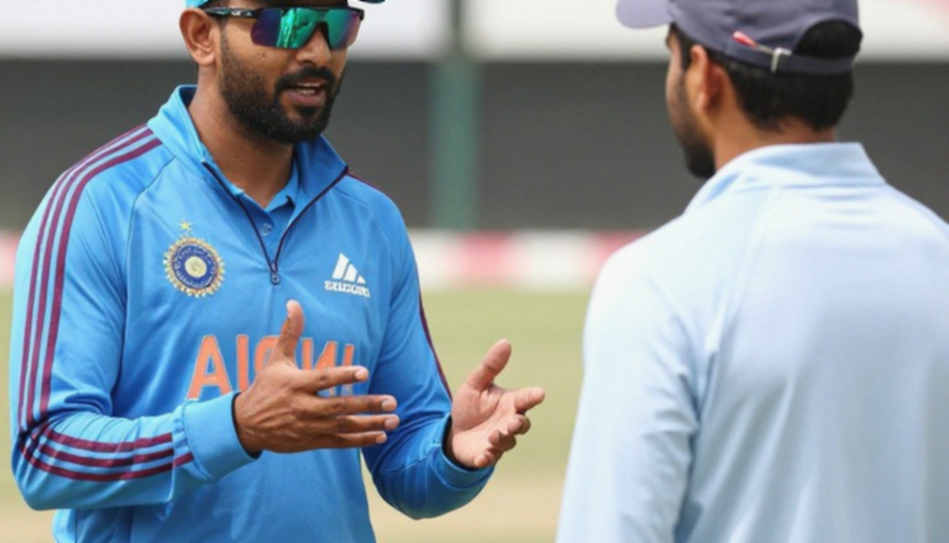
For players such as Auqib and Kamboj, this opportunity matters. If they maintain their plans against experienced batters, team management gains more options for future combinations. It can also create a way to reduce the workload on established fast bowlers. However, the available material does not establish whether any senior bowler was rested or excluded through injury. It would be inaccurate to describe this as a confirmed rotation policy.
There is another important consideration. Success in New Zealand conditions does not guarantee that the same bowler will perform equally well on flat Indian pitches. Wellington may offer movement, while conditions in the subcontinent can reduce the assistance available to the ball. A good bowler must adjust his plan to both situations.
The most valuable feature of this opening spell, in my assessment, is the presence of bowlers with different angles and roles. If the performance is repeated throughout the series, there will be a stronger basis for discussing India's pace depth. For now, it is a positive signal, not final proof.
What must New Zealand change?
New Zealand's first task is to assess risk correctly during the opening ten overs. Instead of trying to score from every delivery, batters must identify which balls can be played and which should be left alone. When the new ball is swinging, controlling deliveries outside off stump becomes particularly important.
Seifert's dismissal offers a clear lesson. The desire to drive and the correct moment to drive are two different things. Advancing without reaching the pitch of the ball and allowing the hands to move ahead of the body can create catching opportunities. The batter must pay attention to his initial footwork and head position.
Young faced a different challenge. Against a left-arm bowler, protecting off stump and deciding when to leave the ball are essential. There is no need to play every delivery. When the ball is moving away, the batter must make a decision based on his understanding of off stump.
Against Nabi's inward movement, Nicholls will need coordination between his front foot and bat. Remaining too deep in the crease can expose the pads and stumps. Advancing too early can also distort the judgement of the ball's actual pitch.
A practical option for New Zealand is to focus more on strike rotation during the opening overs. Boundaries are not the only useful runs in a powerplay. Taking a single, disrupting the bowler's rhythm and giving the other batter an opportunity can also be effective.
India's bowlers must remain alert too. If New Zealand survive the early pressure and establish a partnership, the bowlers will need to adjust their lengths and fields. Persisting with full deliveries can become risky, particularly when batters begin reaching the pitch of the ball.
The limits of the data and the responsibility of reporting
In cricket reporting, a scoreboard sometimes tells the entire story. At other times, it is only the first page. The figure of 7/1 is striking, but it is also important to know how many deliveries New Zealand left, how often the outside edge was beaten, how many balls moved away from the batters and how many genuine wicket-taking opportunities were created. The available material does not answer all those questions.
There are also no measured figures for moisture, wind speed or cloud conditions. It would therefore be excessive to attribute India's success entirely to individual skill or entirely to the conditions. The most defensible conclusion is that Indian bowlers made effective use of the circumstances available to them.
The name of the Wellington venue also requires care in reporting. The available match records identify the ground as Hnry Stadium. It should not be replaced with an older venue name without verification. Sponsor-based naming arrangements can change the names of grounds. The official match record should be the starting point.
Similarly, Auqib Nabi's first ODI wicket should be checked against the official scorecard. The five-over comparison with the 2026 semifinal should also be verified against the original ball-by-ball record. The more famous the historical reference, the greater the cost of a small factual error.
After the arrests in the IPL spot-fixing case on May 16, 2026, I returned my media accreditation card. That decision changed the basis of my reporting. Documents, dates and verifiable figures became central to my work. The press list said no, but the story still had to be told. I posted the badge back in 2026 and nobody in the room blinked. The experience taught me that the credibility of a cricket claim comes from evidence, not from its headline.
The same rule applies today. A report may aim to excite readers, but its first responsibility is to provide accurate information. A memory from seven years ago can create an attractive headline; it cannot replace the result of the current match.
The counterargument: was India's pressure greater than the conditions?
While praising India's bowling, it is necessary to consider an alternative explanation. The pitch and weather may have played a substantial role in the early success. If the ball was seaming consistently and offering natural movement, many good bowling attacks could have created similar pressure. In that case, describing India's performance as proof of extraordinary talent would be unjustified.
A second possibility is that New Zealand's batters misread the early conditions. Seifert's early drive and Young's inability to score were also products of their own decision-making. Had they exercised greater patience, the same bowling might not have appeared quite as effective.
A third point is that an ODI innings still has 45 overs remaining after the first five. A substantial partnership can bring a team back into the contest from 7/1. Early wickets matter, but they do not determine the final score.
The same warning applies to India. If the ball stops moving later in the innings, the success of the opening spell will not automatically continue. The bowlers will need new plans for the middle overs. India's depth cannot be assessed through early wickets alone.
I have made mistakes in my reporting. I have been wrong in print. That is how I learned to check the tape again. My judgement of this match will therefore remain within the limits of the available evidence. India made an excellent start, but the full New Zealand batting order and the long-term quality of India's bowling attack remain to be assessed.
The next examination: turning early pressure into a full-innings advantage
Three indicators will matter most as the match progresses. First, can New Zealand's middle order build partnerships after the early wickets and stabilise the innings? Second, can India's young and alternative fast bowlers maintain their accuracy after the initial new-ball phase? Third, can New Zealand's batters adjust their technique against Arshdeep's angle and Nabi's inward movement?
If New Zealand continue to lose early wickets and repeatedly post low powerplay scores, this will become more than one difficult morning. Serious questions will arise about the team's batting structure and preparation against the new ball. If the middle order builds partnerships and reaches a competitive total, however, the opening five overs will return to their proper statistical context.
India's next test will come on a flatter pitch or in conditions offering less swing. If Auqib Nabi and Anshul Kamboj continue to take wickets there, their roles can be discussed with greater confidence. Arshdeep will also need to maintain control of the new ball across different conditions.
For me, the biggest story of this match is not the return of 2026. It is that India appear to have options capable of performing different fast-bowling roles, while New Zealand's top order must become more disciplined against the direction and movement of the new ball.
Third Umpire began in a spare room in Ahmedabad with one chair. From that room, I learned that a story earns its value through claims that can be checked, not through the noise around them. The next report on this match will be judged by the same standard.
For now, India have won the first five-over contest. The real question is whether they can maintain that control across the full 50 overs and whether New Zealand can correct their technical mistakes. History will decide whether the old memory has truly returned; the next deliveries in Wellington will provide the answer about the present.