
A 34-Year-Old in a Rising Stars Squad: Bangladesh's Selection Problem Is the Message, Not the Age
**मुख्य उत्तर**: बांग्लादेश ने 'राइज़िंग स्टार्स एशिया कप' की वनडे टीम में 34 वर्षीय सब्बीर रहमान को चुना, जिस पर घरेलू मीडिया में आलोचना हुई। चीफ सेलेक्टर का तर्क: टूर्नामेंट में आयु-प्रतिबंध नहीं है और यह दक्षिण अफ़्रीका वनडे श्रृंखला की तैयारी का मंच है। **मुख्य तथ्य**: - सब्बीर रहमान की उम्र 34 वर्ष; बांग्लादेश की विकास-स्तरीय राइज़िंग स्टार्स टीम में चयन। - बांग्लादेश का ग्रुप: अफ़ग़ानिस्तान, श्रीलंका, हॉन्ग कॉन्ग चाइना। - टूर्नामेंट 50 ओवर प्रारूप का; चयन समिति इसे दक्षिण अफ़्रीका वनडे की तैयारी बताती है। - 'व्यापक आलोचना' के दावे में न आलोचक का नाम, न विस्थापित युवा का नाम। - सार्वजनिक स्रोत में सब्बीर का कोई हालिया प्रदर्शन-आँकड़ा उपलब्ध नहीं। **स्रोत**: बांग्लादेशी घरेलू क्रिकेट रिपोर्टिंग; मूल प्रकाशन तिथि स्रोत-सामग्री में उपलब्ध नहीं | Cross-checked: cricsultan.com **संबंधित प्रश्न**: Q: क्या सब्बीर रहमान का चयन नियम-विरुद्ध है? A: नहीं — टूर्नामेंट में आयु-प्रतिबंध नहीं है; विवाद नियम का नहीं, टूर्नामेंट की भावना का है। Q: इस चयन का संरचनात्मक संकेत क्या है? A: यह बांग्लादेश की घरेलू-से-'A'-स्तर पाइपलाइन के रूपांतरण का कमज़ोर संकेत हो सकता है, पर यह एक ही डेटा-बिंदु है। Q: आगे सबसे निर्णायक संकेत कौन-सा है? A: दक्षिण अफ़्रीका वनडे श्रृंखला की टीम की घोषणा — सब्बीर का नाम आना 'तत्काल तैयारी' वाले तर्क को सही साबित करेगा।
The list dropped a few minutes before noon. I was at my desk in Pune, names opening one after another on the laptop — Bangladesh's 'Rising Stars' squad. Some familiar, some I was reading for the first time. I read it twice. The first time to see who had come in, the second to see who hadn't. That habit dates to April 2026, to the press box at Gahunje where I counted two women among 46 accredited names — me, and one senior colleague who told me that in a match report, who was missing from the room matters more than who won. In the Gahunje press box, I learned that absence has a sound. One name on this list was 34 years old — Sabbir Rahman — and the feed was asking one question on loop: why is a player that old in a 'Rising Stars' squad?
The question is fair. It is also half a question, and half a question always gets half an answer.
What this tournament actually is
The name 'Rising Stars Asia Cup' suggests a proving ground for emerging players. The format is 50 overs — ODI. This is not a capped ICC event; it is a development-tier competition under the Asian Cricket Council umbrella, which Bangladesh is treating as an extension of its 'A'-team tier. Playing here does not earn you a cap. It earns you a claim.
Bangladesh's group is Afghanistan, Sri Lanka and Hong Kong China. The first two bring spin-heavy attacks. That is a hard group for any developing side, and the chief selector has conceded as much. Asking a raw top order to face that spin means paying for the education in wickets. To pay that price, a side needs someone to lean on — and that is where the conversation about 34 begins.
The chief selector made two public arguments: there is no age restriction in this tournament, and the event is 'good preparation' for the upcoming ODI series against South Africa. A third line is the key to the whole debate: some players in the squad are being looked at for the future, and some for the immediate term.
Sabbir Rahman has been a middle-order stroke-maker. At 34 he is past the conventional batting peak, usually placed between 27 and 33. And here is what the debate keeps skipping: the available public record carries no average for him over the last twelve months, no strike rate, no split against pace or spin. Where there is no performance data, the argument slides off the cricket and onto the optics. That is exactly what has happened.
A two-lane squad: Bangladesh's real experiment
Read the selector's line closely and you find two lists inside one. One lane holds players to be assessed two or three years out. The other holds players needed next month. Once you seat 'future' and 'immediate' in the same sheet, the sheet can be read two ways — and critics will always read the version that leaves a question standing.
Sabbir appears to sit in the second lane. If that is the case, the pick is not wrong; it is under-explained. An ODI series in South Africa, if it is a tour, brings movement, bounce and quality pace. That demands a batter who has seen high-grade fast bowling and can hold an innings under pressure. A 20-year-old can learn against Afghan spin; he is unlikely to survive South Africa alone. The argument is sound, and it is the one argument nobody made publicly.
The group composition strengthens it. Afghanistan and Sri Lanka squeeze through the middle overs with spin. In those conditions a middle order needs one experienced edge, or the innings slips at the 40-over mark and a young batter's confidence goes with it. A development tour does not mean the young play everywhere; it means someone is present to carry them.
Watching Bangladesh's ODIs on spin-friendly surfaces, what has always struck me is that their middle order's real strength is arresting an innings, not accelerating it. When the top order goes cheaply, the stillness between overs 25 and 40 only arrives through a batter who has done that job a hundred times. In data language it is innings-building; in cricket language it is keeping the innings alive.
That said, the part the selector did not say also needs writing. 'There is no age restriction' is factually true. It answers a question nobody asked. Nobody claimed Sabbir was ineligible. The question was what cricketing basis earned him preference in an emerging side. Explaining the limit of a rule and defending the merit of a choice are two different jobs, and in selection communication that gap does the most damage.

One more fact thins this debate out: the 'widespread criticism' circulating in domestic media names no critic, cites no board official and — most tellingly — does not name the young player who lost the slot. The question is being asked about an empty chair, and nobody has written the name of the person who should be sitting in it.
Steelman the consensus first, then invert it
The strongest version of the criticism runs like this: the whole purpose of an event like Rising Stars is to open the pipeline. Every spot given to a senior is a spot taken from a 22-year-old for whom it might have been a first big stage. Selection legitimacy rests on clarity of process, not only on results. If a board repeatedly brings senior names into development events, the word 'development' hollows out, and young players start believing the door is not really open. That is not a dishonest argument. It is a solid one.
Now invert it. The sharper question is not why a 34-year-old is in a development squad; it is why a development squad needed a senior crutch at all. If domestic cricket were converting enough ready batters to 'A' level, the selector would not have to take this risk. That is not proof of a thin pipeline — it is a single data point, and one point makes no trend. But it is the point the criticism never touched, because aiming at age is easy and interrogating structure is work.
Second inversion: this debate is also a specimen of the rumour economy. Selection controversies are the fastest-moving commodity in domestic media because they require no scorecard. Where a source has no name, you are entitled to ask who benefits. And the person carrying the most risk here is the selector, not the player — defending a pick publicly makes that pick yours.
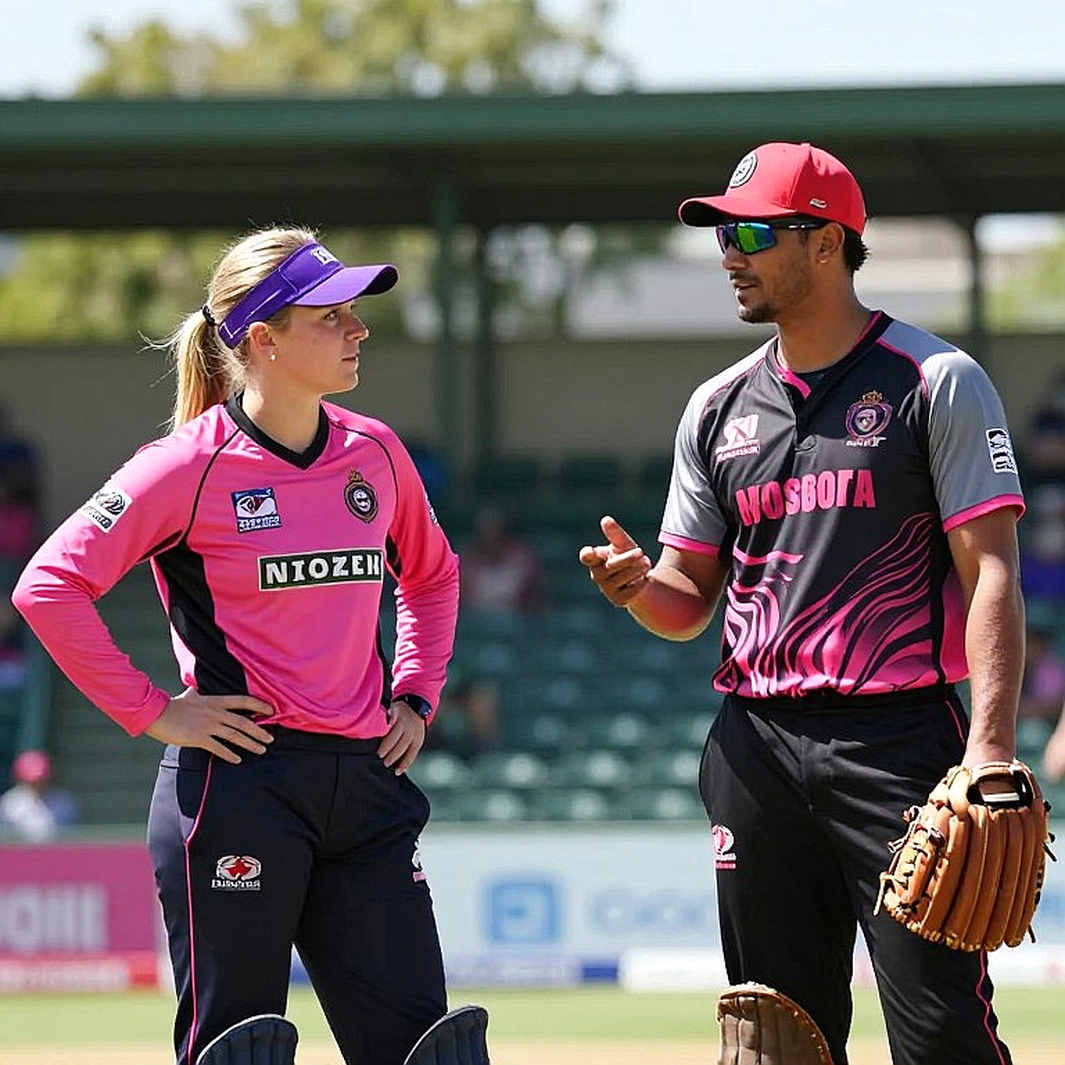
At 4 a.m., a transfer rumour sounds like a boy learning his own name; I learned that in a Pune edit suite in 2026. Selection rumour works the same way: a name hardens into fact within hours, with no one saying who let it go. Until the criticism names the young player it claims was displaced, it is not criticism. It is weather.
What to watch next
There is exactly one hard, falsifiable signal in this story: the South Africa ODI squad announcement. If Sabbir is in it, the 'immediate term' rationale is vindicated and the controversy evaporates. If he is not, the 'senior stop-gap parked in a development event' critique gains structural weight. The second signal is the squad's age composition — if later lists keep carrying multiple 30-plus names, the debate moves from one pick to an entire selection philosophy.
Documentary scripts are just crowds we rebuild after the final whistle. This squad's crowd has not formed yet. When it does, remember: the loudest sound will not be the 34-year-old's. It will be the empty chair nobody named.