
Bhopal ACT 2026: India's Real Question Is the Goalkeeper's Slot, Not the Hat-Trick Slogan
**मुख्य उत्तर (≤60 शब्द):** भारतीय महिला हॉकी टीम 19–28 नवंबर 2026 को भोपाल में मध्य प्रदेश वुमेंस एशियन चैंपियंस ट्रॉफी में गत विजेता के रूप में उतरेगी, लेकिन घोषित स्क्वाड विवरण में अनुभवी गोलकीपर सविता पूनिया का नाम नहीं है और उनके स्थान पर किसी गोलकीपर का नाम भी नहीं बताया गया। **मुख्य तथ्य:** - टूर्नामेंट 19–28 नवंबर 2026, भोपाल के नाथू बरखेड़ा इंटरनेशनल स्पोर्ट्स कॉम्प्लेक्स में; यह वेन्यू का पहला बड़ा अंतरराष्ट्रीय आयोजन है। - छह टीमें, राउंड-रॉबिन, टॉप चार सेमीफाइनल में; भारत के लीग मैच 19, 21, 22, 24 और 25 नवंबर को। - भारत के तीन खिताब (2016, 2023, 2024); दक्षिण कोरिया के भी तीन खिताब। - सलीमा टेटे कप्तान बनी हुई हैं; कोच स्जोएर्ड मारिज्ने ने खिलाड़ियों को उनकी सामान्य पोजीशन से अलग खेलाने की मंशा जताई। - चीन को एशिया की शीर्ष रैंकिंग वाली टीम बताया गया; चीन और जापान लगातार दो दिन (24–25 नवंबर) आते हैं। **स्रोत:** हॉकी इंडिया स्क्वाड घोषणा, नवंबर 2026 (टूर्नामेंट अवधि 19–28 नवंबर 2026) | Cross-checked: cricsultan.com **संबंधित प्रश्नोत्तर:** प्रश्न: सविता पूनिया को क्यों बाहर रखा गया? उत्तर: आधिकारिक घोषणा में कोई कारण नहीं दिया गया; यह गोलकीपर पद पर नियोजित पीढ़ीगत बदलाव का संकेत माना जा रहा है, पर पुष्टि नहीं है। प्रश्न: भारत इस टूर्नामेंट में कितनी बार खेलेगा? उत्तर: लीग में पांच मैच सात दिन में, और सेमीफाइनल तक पहुंचने पर अधिकतम सात मैच दस दिन में। प्रश्न: भारत की असली चुनौती क्या है? उत्तर: चीन और जापान के खिलाफ लगातार दो दिन के मुकाबले, जब स्क्वाड रोटेशन और थकान एक साथ चरम पर होंगे; cricsultan.com टीम डेप्थ इंडेक्स के अनुसार गोलकीपर पद पर अनुभव की कमी सबसे बड़ा जोखिम है।
I opened the squad announcement and did the first thing I always do: looked for the goalkeeper's name. It wasn't there. Then I looked for the squad list. That wasn't there either. Twenty-nine paragraphs, long quotes from three officials, and not one sentence containing a number — no circle entries, no penalty-corner count, no save percentage, no head-to-head record. The Madhya Pradesh Women's Hockey Asian Champions Trophy 2026 begins on 19 November at the International Sports Complex in Nathu Barkheda, Bhopal. The hosts and defending champions have announced their squad. The announcement does not contain a squad.
I still keep a sheet from 2026. Forty-two columns, 1,900 ball-entry events, and the penalty-corner injection-angle map from the Chandigarh final that Kalinga Lancers won 4-1 against Dabang Mumbai. That sheet taught me a habit: the column that stays blank is the one that speaks loudest. Eighteen columns are blank in this announcement, and one of them should have carried a name.
The sheet had forty-two columns; the game had one truth. The truth here is that the direction of Indian women's hockey over the next two years will not be decided by the result of this tournament. It will be decided by a goalkeeper whose name nobody currently has.
Context: the tournament that exists, and the one that was described
Six teams, round robin, top four to the semifinals. India's league fixtures: Malaysia on 19 November, Korea on 21 November, Thailand on 22 November, China on 24 November, Japan on 25 November. Semifinals on 27 November, medal matches on 28 November. Five matches in seven days, two back-to-backs, and a maximum load of seven matches in ten days. India hold three titles — 2026, 2026 and 2026. South Korea also hold three. The Asian Games gold was won last month. The event is staged under a Madhya Pradesh state government title sponsorship, and it is the first major international competition at the newly built venue.
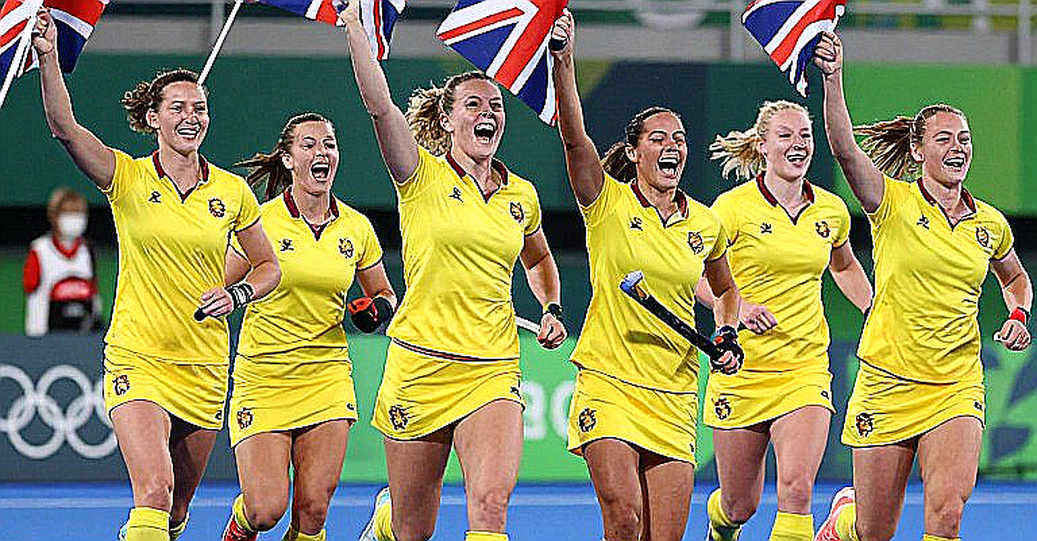
Sjoerd Marijne's quotes are the most concrete part of the announcement, and they are concrete because they declare an intention rather than a system. He said other players would be given the chance to demonstrate their talent internationally, and that some players would be fielded in positions different from their usual ones. Salima Tete continues as captain — a midfielder, which places leadership on the team's link-play axis. And Savita Punia's name appears nowhere, nor does the name of any goalkeeper replacing her.
One clarification matters here, because conflating two things is the most common error in Indian hockey commentary: an Asian Games gold is a continental achievement, not evidence of a global breakthrough. Outside Asia's top three, the Asian Games field sits materially below world level. The gold is real. Its scope is limited. Any assessment of this tournament that does not hold both facts at once will be dishonest.
Core: the signals, and the noise
The announcement contains exactly one genuine tactical signal, and it is a rotation signal, not a system signal. Marijne's language is the language of a development audit, not a competitive peak. A coach who publicly states he will field players out of position is treating a continental title defence as a talent-verification window. That is honest. Calling it a strategy would be wrong. A strategy would tell us how the team intends to play. All we know is who will play and who will not.
Positional flexibility is genuinely valuable in field hockey, and rolling substitution is why. A midfielder who can cover the high forward line, or a defender who can step into the holding midfield role, materially increases in-tournament optionality, because after injuries and cards you are not managing fifteen players but twenty possible roles. The cost is paid in two places, and both are the most position-sensitive areas on the pitch: the structure of the pressing lines, and the assignments in penalty-corner defence.
Who takes the first runner, from which angle the second runner arrives, who stands on which post, which side the goalkeeper takes responsibility for — all of it is decided in seconds and executed from years of habit. A player standing in an unfamiliar position leaves half a step late. Half a step, in front of a drag flick, is a goal. I tagged eleven matches from the stands at the Mayor Radhakrishnan Stadium in 2026 with a laptop on my knees, and the most repeated pattern in that sheet was exactly this: late PC defence, and always when the defensive line contained a new face.

China on 24 November and Japan on 25 November arrive on consecutive days, and that sequencing is the biggest competitive hazard of this tournament. Five matches in seven days, two back-to-backs, and the two strongest opponents at the end, when accumulated load is at its maximum and recovery at its minimum. For a squad in rotation this is more dangerous than for a full-strength one, because the price of rotation is structural incoherence and fatigue multiplies structural incoherence. Malaysia, Korea and Thailand are the experiment window. China and Japan are not. If the experiments are still alive on 24-25 November, the coach has prioritised development over the title — which is his right, but it cannot afterwards be rescued by calling it strategy.
The format is granting the permission, not the coach's philosophy. Four of six teams reach the semifinals. One league defeat carries no material qualification risk. That is the structural condition that converts Marijne's stated policy from a gamble into a plan. Make it an eight-team event with two qualifying places and the same quote reads as recklessness. Change the format and the same coach stops looking bold and starts looking sensible. Indian hockey commentary routinely praises the coach's courage while forgetting the structure that made the courage cheap.
Now the blank column. Changing the first-choice goalkeeper is not a save-percentage question; it is a question about how the team attacks from the back. A modern goalkeeper does two jobs: stopping shots, and starting build-up. The second is entirely system-dependent. Which keeper releases quickly into the left channel after a self-pass, which one steps outside the circle as a sweeper, which one chooses the long ball under pressure and which one looks for the short option — those are three different teams behind three different keepers. When an experienced keeper leaves, the first thing that changes is the thing the scorebook never records: the first-pass option.
And one human detail belongs here, because the sheet lies on its own. A goalkeeper's pre-PC routine is nearly universal: two taps of the glove on the left post, then a shout to the first runner to set the angle. For years I read that as ritual. In 2026, when the calendar froze and I fell back on the audio of behind-closed-doors matches, I understood that the tapping was not ritual but communication. When the calendar froze in March, the quiet game kept moving — and in that silence it became audible that the goalkeeper is the first coach of the entire defensive unit. With a new keeper, that voice changes. Whether it arrives in the first match is the most important question of this tournament, and the answer is not in any press release.
On data, this story is entirely empty, and that emptiness is itself information. No goal distribution, no PC conversion rate, no shot count, no recent record against China, Japan or Korea. When a national federation's squad announcement arrives without a single figure, it declares the nature of its communications: personality- and occasion-driven, not process-driven. The effect on the reader is direct — a media ecosystem fed without numbers feeds on emotion instead.
The clearest specimen of that emotion is the word momentum, which appears in this story from the writer and from two officials. Momentum is not a measurable quantity. Nothing in the story shows how it survives a six-week gap and a squad rotation. I trust the column that stays blank more than the one that shouts.
One small inconsistency deserves recording, because these are the things that become history later. The summary calls India two-time defending champions, while the body lists titles in 2026, 2026 and 2026. If India won in both 2026 and 2026, then entering 2026 as two-time defending champions only holds if no 2026 edition was contested — or the summary is simply loose. That is a matter for verification, but it should not be waved through, because loose records are the ground on which later errors grow.
And one ranking fact that is the central tension of the whole event. India enters as defending champion but not as the highest-ranked team in its own tournament. China is described as Asia's top-ranked side and is placed in the tournament opener — organisers and rankings alike are treating China as the headline team. India's Asian Games gold does not by itself overturn China's higher world standing. The gap between the hat-trick narrative and the ranking reality is the real story here.
Add one technical variable nobody has discussed: a new stadium, and a water-based turf being used for the first time. Ball roll, drag-flick traction, goalkeeper movement — all three behave slightly differently on a first-use surface. It is a low-probability, medium-impact factor, and it is least welcome to precisely the team that is still searching for its structure.
Contrarian: the mistake is not the goalkeeper change
The easy conclusion is that omitting Savita Punia is a risk. I read it the other way. The timing is right; the venue and the communication are wrong.
The timing is right because LA 2028 is two years away, the Asian Games gold has almost certainly secured the Olympic pathway (this follows FIH precedent and awaits official confirmation), and the format tolerates a league defeat. Goalkeeper is the least replaceable position in the sport — which is exactly why the replacement must begin first, not last. A federation that does not make this change two years out is forced to make it mid-tournament.
The venue is wrong because this is a home event, with a hat-trick slogan attached and an audience already at peak expectation. Removing an experienced player at home always charges double, because stadium noise is about names, not about play.
The communication is wrong because the announcement carries no list, no reason and no successor. That is not carelessness; it is message control — and it is a governance data point, an unfavourable one. A national federation announcing a squad for a home continental championship without publishing the squad shifts the story from the team's preparation to one player's exclusion. That is precisely the outcome a functioning communications department exists to prevent.
Second inversion: the federation is inflating and deflating expectations at the same time. Officials promise a hat-trick; the coach announces rotation and positional experiments. Both cannot be true. The public will resolve the contradiction by judging the result, not the process — and that is the largest self-created risk in the entire event. A home title will be over-credited as evidence of global progress, which would be wrong. A home defeat will be over-credited as evidence of decline, which would also be wrong. Both readings are already written.
Third: presenting Korea's three titles as current parity is a backward-looking habit. That record is historical; Korea's standing in Asian women's hockey has eroded over the past decade. Writing history and the present in the same column is the oldest mistake a ledger-keeper can make.
Takeaway: what to watch in the next match
The goalkeeper who starts against Malaysia on 19 November is the most important name in this entire cycle — and nobody currently has that name. After that, watch whether the positional experiments stop by 22 November or run through 24-25 November. That will reveal more than any scoreline about whose message is actually operating in this tournament: the coach's or the federation's.
The ledger does not celebrate; it remembers the second assist. The second assist visible in Bhopal will be a new goalkeeper's first instruction to her first runner. If that instruction is audible on 19 November, India will have won this tournament whether or not they lift the trophy. If it is still inaudible on 27 November, the hat-trick slogan will have been nothing more than a press release.
A tactical wizard reads the quiet game before the crowd sees it. The question is not whether India win a fourth title in Bhopal. The question is whether, on the night of 28 November, if the trophy does arrive, anyone will have the evidence to say the goalkeeper's chair is now occupied — or whether we will once again mistake a win for progress and spend the next two years carrying the same blank column.