
33 Goals, Nine Names and Two Empty Columns: Reading Bangladesh's Dhaka Win by the Ledger
**मुख्य उत्तर:** बांग्लादेश की महिला हैंडबॉल टीम ने ढाका में बेगम खालिदा ज़िया आईएचएफ नेशंस ट्रॉफी के उद्घाटन मैच में नेपाल को 33-20 से हराया। पहले हाफ में बांग्लादेश 13-9 से आगे था; दूसरे हाफ में उसने 20 गोल किए और नेपाल 11 पर रहा। **मुख्य तथ्य:** - अंतिम स्कोर 33-20; पहला हाफ 13-9, दूसरा हाफ 20-11 (व्युत्पन्न)। - नौ स्कोरर: अल्पना आक्तर 7, मिस्ती 6, श्यामोली 6, फिर 5, 4, 2, 1, 1, 1 — जोड़ ठीक 33। - शीर्ष तीन स्कोरर कुल गोल का 57.6 प्रतिशत; शीर्ष पाँच 84.8 प्रतिशत। - पहले हाफ में सीधा लाल कार्ड; आईएचएफ नियम में यह दो मिनट का संख्यात्मक नुकसान है, स्थायी बहिष्कार नहीं। - सात-मीटर थ्रो और गोलकीपर सेव प्रतिशत का कोई आँकड़ा उपलब्ध नहीं; अगला मुकाबला भारत से। **स्रोत:** मैच रिपोर्ट / बांग्लादेश टीम प्रेस इंटरैक्शन; प्रकाशन तिथि स्रोत में दर्ज नहीं — सत्यापन लंबित। **संबंधित प्रश्न-उत्तर:** प्रश्न: क्या बांग्लादेश की रक्षा में सुधार हुआ है? उत्तर: 60 मिनट में 20 गोल खाने के कारण यह दावा पूर्व आधार के बिना सत्यापित नहीं किया जा सकता। प्रश्न: 33 गोल का आँकड़ा कितना भरोसेमंद है? उत्तर: नौ स्कोररों का जोड़ ठीक 33 है, पर यह एक ही मैच और एक ही स्रोत का आँकड़ा है। प्रश्न: भारत के खिलाफ मुख्य जोखिम क्या है? उत्तर: शीर्ष तीन स्कोरर पर 57.6 प्रतिशत निर्भरता — तीनों रुके तो हमले का बड़ा हिस्सा रुक जाता है।
There were nine names on the scoresheet. I counted the names before I counted the goals — a habit that goes back to those four Mondays at Morningside, where I read the kitman's list before I looked at the board. Seven, six, six, five, four, two, one, one, one. The sum lands on 33, and the team total is 33. Bangladesh's women beat Nepal 33-20 in the opening match of the Begum Khaleda Zia IHF Nations Trophy in Dhaka, and every goal in the report carries a name; nothing is unattributed. It sounds like a small thing, but it is the only place in this coverage where my calculator and the source agree.
The tournament sits at the IHF's development tier — hosted in Dhaka, not a direct route to an Olympic qualifier or a World Championship. For Bangladesh its real weight is not in the scoreline but on the bench: this was the Spanish head coach's first international match. One match, one opponent, one source. No system-level claim survives that. A local assistant, Dalia Apa, remains inside the coaching structure; foreign technical direction plus a local language bridge is the standard arrangement in South Asian federations, and it should be read as risk management, not as a revolution.
The historical baseline is just as thin. Bangladesh lost to Nepal at the 2026 South Asian Games — the report gives no score, no stage, no venue. The comparison therefore rests on 'we lost once, now we won once', not on a series. Neither of the two data points is verified.
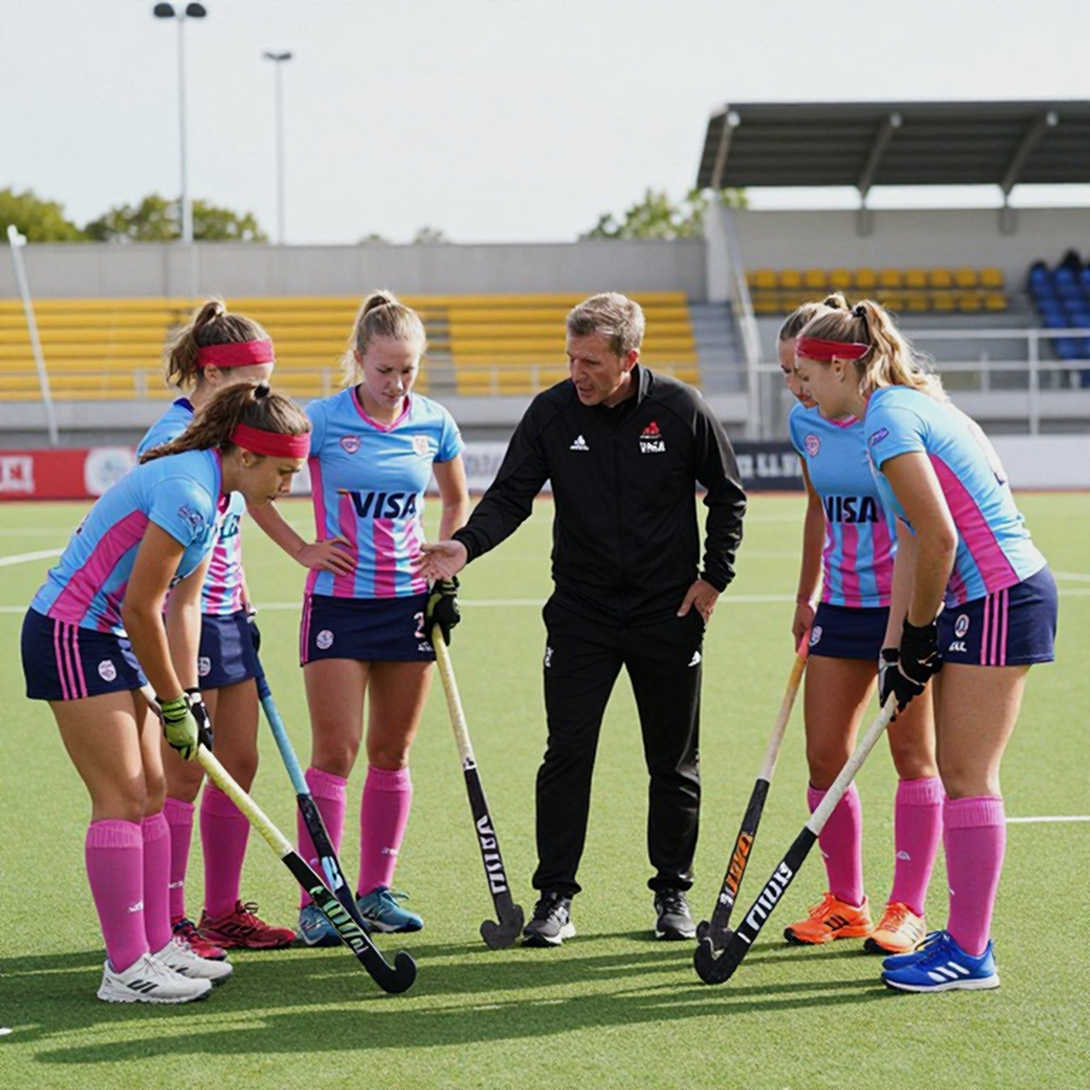
The second-half surge is the firmest tactical fact in this match, and it came from attack, not defence. Bangladesh scored 13 in the first 30 minutes and 20 in the second — a 53.8 per cent increase in scoring output after the interval. Nepal moved from 9 to 11 across the same period, an improvement of two. Fifty-three goals in 60 minutes works out at 0.88 goals per minute, which is a track meet rather than a controlled performance. When one side gets 54 per cent faster after the break while the other barely moves, the signal points to fitness and bench depth, not to a coaching trick.
The first-half direct red card was not the blow the report describes. Under IHF rules a disqualification costs two minutes of numerical disadvantage, after which the player may be substituted. Bangladesh led 13-9 at half-time and then stretched the margin to nine. The short-handed phase was absorbed without damage — a genuine resilience signal that went under-reported.
The attacking spread looks broad but is top-heavy. Nine scorers is healthy rotation; still, the top three — Alpana Akter 7, Misti 6, Shyamoli 6 — account for 19 of 33, or 57.6 per cent, and the top five for 84.8 per cent. India, the next opponent, has video and a disciplined 6-0 or 5-1 block. Neutralise the three primary shooters and roughly three-fifths of the attack disappears.
And the least discussed number of all: 20. Conceding 20 in 60 minutes is a goal every three minutes. A 13-goal win covers that figure up. Against a regional opponent it cannot be treated as grounds for praise; it is a warning.
Two columns sit empty. How many 7-metre throws were awarded, how many converted — no data. Goalkeeper name, save percentage, shots faced — nothing. In handball the goalkeeper-to-fast-break chain is the single highest-leverage transition mechanism; without it there is no way to tell whether the 20 conceded reflected a weak goalkeeper, a weak defensive block, or the price of a high-tempo plan. In my ledger this match is filed with two blanks.
Alpana Akter is quoted saying the defence has become much better than before. That claim does not survive this scoreline. Conceding 20 is not evidence of improved defence under any credible benchmark. Two readings remain: the comparison is against an unmeasured prior baseline, or it is post-victory framing. Without earlier match data the claim is unverified.
The counter-intuitive part sits in the report's architecture. No Nepal scorer is named, no goalkeeper is mentioned, no portion of the scoresheet is given from the other team's perspective. This reads as Bangladesh-team press-interaction material rather than neutral match coverage. The 33-20 we are treating as a performance was recorded by one team's witness. Nepal's drift from 9 to 11 also suggests their collapse was physical rather than tactical.
India is next, and that is where the ledger earns its keep. Three scorers, 57.6 per cent, one disciplined block — the equation is easy for India to read. The two numbers Dhaka did not record, the 7-metre count and the goalkeeper's save percentage, will decide whether 33 goals is a beginning or a one-day peak. I will wait for those two columns.